
A Brief History of Indian Wallpaper: The Legacy on Your Walls
There’s a certain gravity to an Indian wall. It’s never just plaster and paint. It’s history, pigment, ritual and the memory of the hands that shaped it. Before Indian wallpaper became a design statement, the story began centuries ago: in palaces, temples and humble workshops where art wasn’t just decoration, but devotion made visible and tangible.
From Frescoes to Fabric
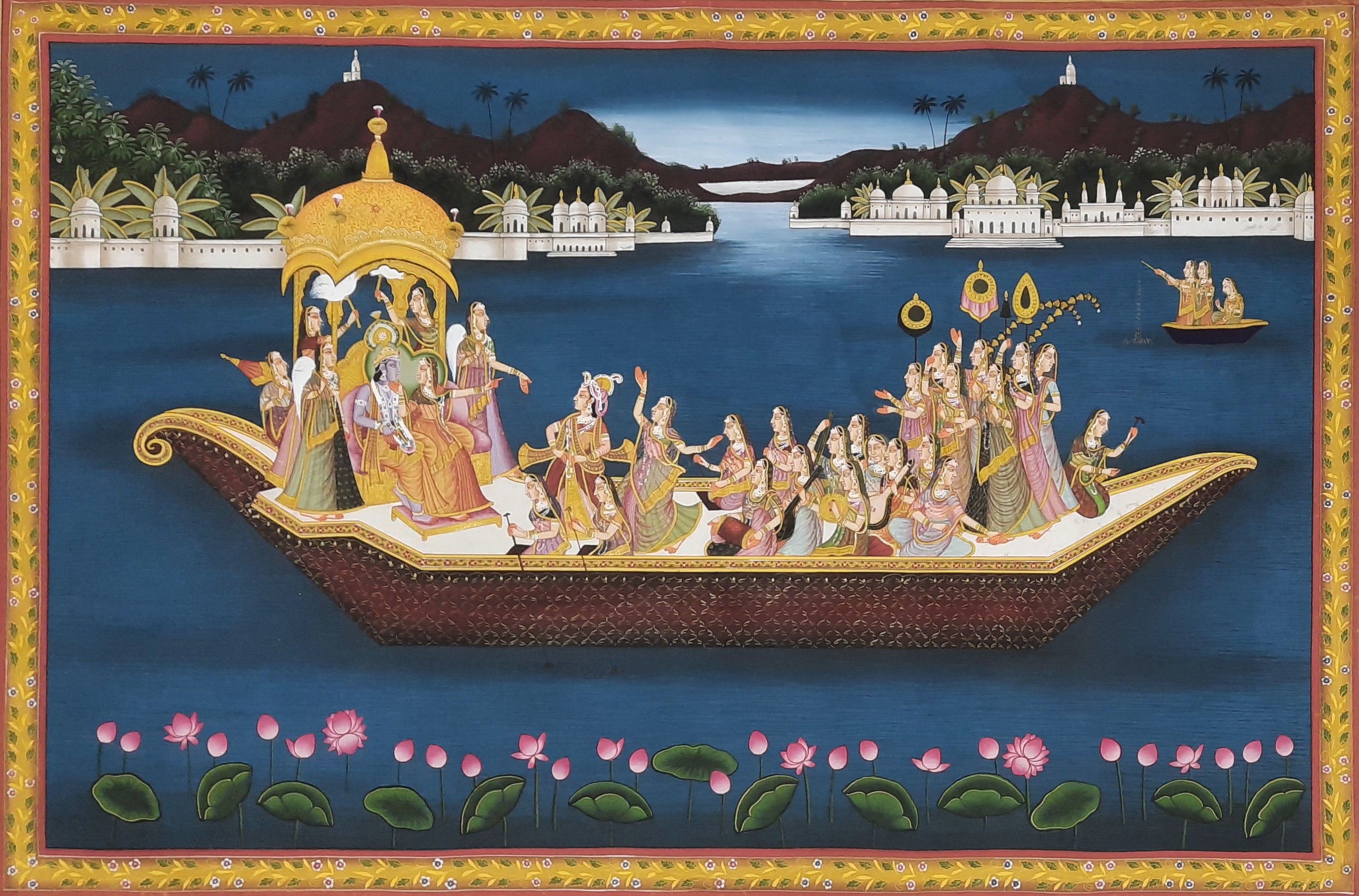
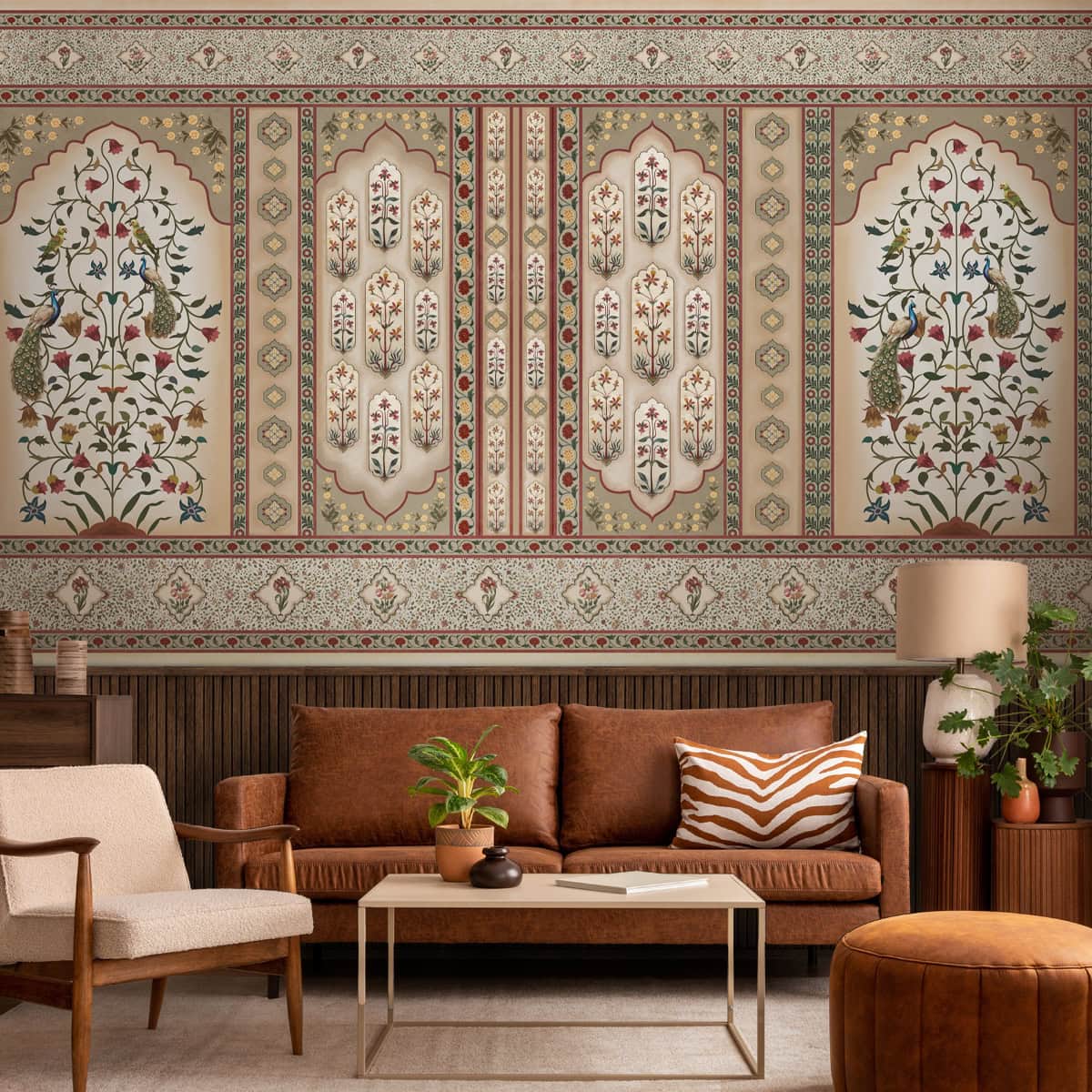
Step into a Mughal palace or a Rajasthani haveli and you’ll see where Indian wallpaper truly began. Walls layered with lime plaster became canvases for frescoes that bloomed with colour. Elephants marched in processions. Peacocks unfurled their feathers. Deities and mortals stood suspended mid-gesture, mid-conversation. Though these were not wallpapers in the modern sense, they served the same purpose that Indian wallpaper does today: transforming space into narrative.
These murals were not random either. Every motif had weight, every colour came from the earth, minerals crushed and plants boiled into pigment. The wall became a living archive. Over time, as tastes shifted and techniques evolved, these fresco traditions shaped what would later become Indian wallpaper as we know it, carrying forward a language of repetition, symmetry and storytelling.
Then, came fabric. Cotton woven and dyed by hand, block printed in regions like Bagru, Sanganfer and Machilipatnam. Artisans carved teak blocks with precision that bordered on reverence. Each press of pigment onto cloth followed a rhythm learned over generations. These textiles weren’t made to be rushed. They were measured and deliberate.
These patterns, floral trellises, paisleys, borders and geometric repetition became the DNA of Indian wallpaper. What we now recognise on walls once draped palaces, shaded windows and lined floors. Fabric taught walls how to repeat without becoming monotonous, how to balance movement with stillness.
Craft as Memory
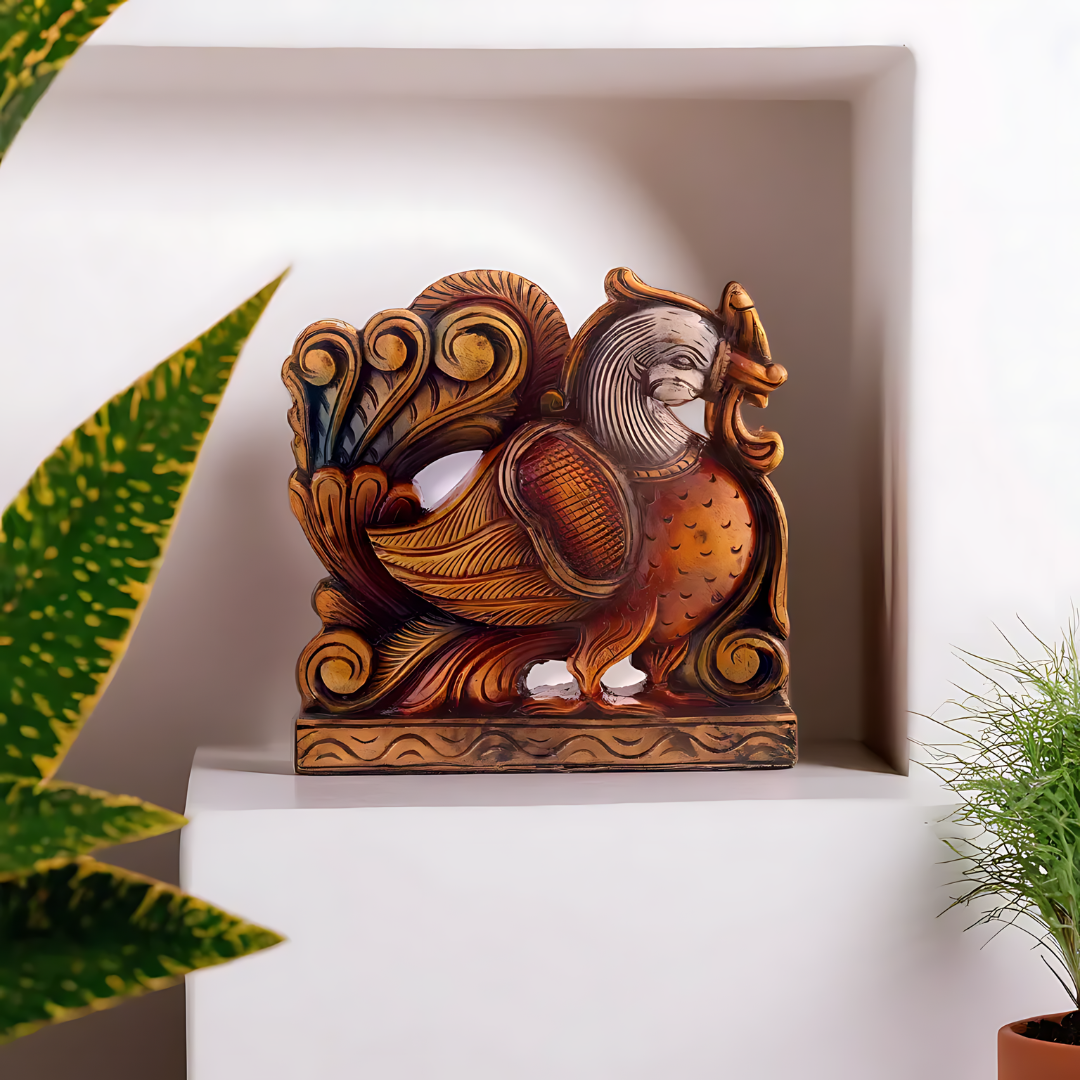
Unlike many decorative traditions, Indian wallpaper is inseparable from craft. Each of the motifs featured in these wallpapers carries the memory of a hand, a tool, a place. For example, the lotus appears not just for beauty, but for renewal. The peacock stands not just for elegance. But for abundance and watchfulness. These motifs all trace their lineage back to folktales, royal hunts and mythological symbolism, allowing for craft to remember what our minds cannot.
Colonial Eyes and Hybrid Hands
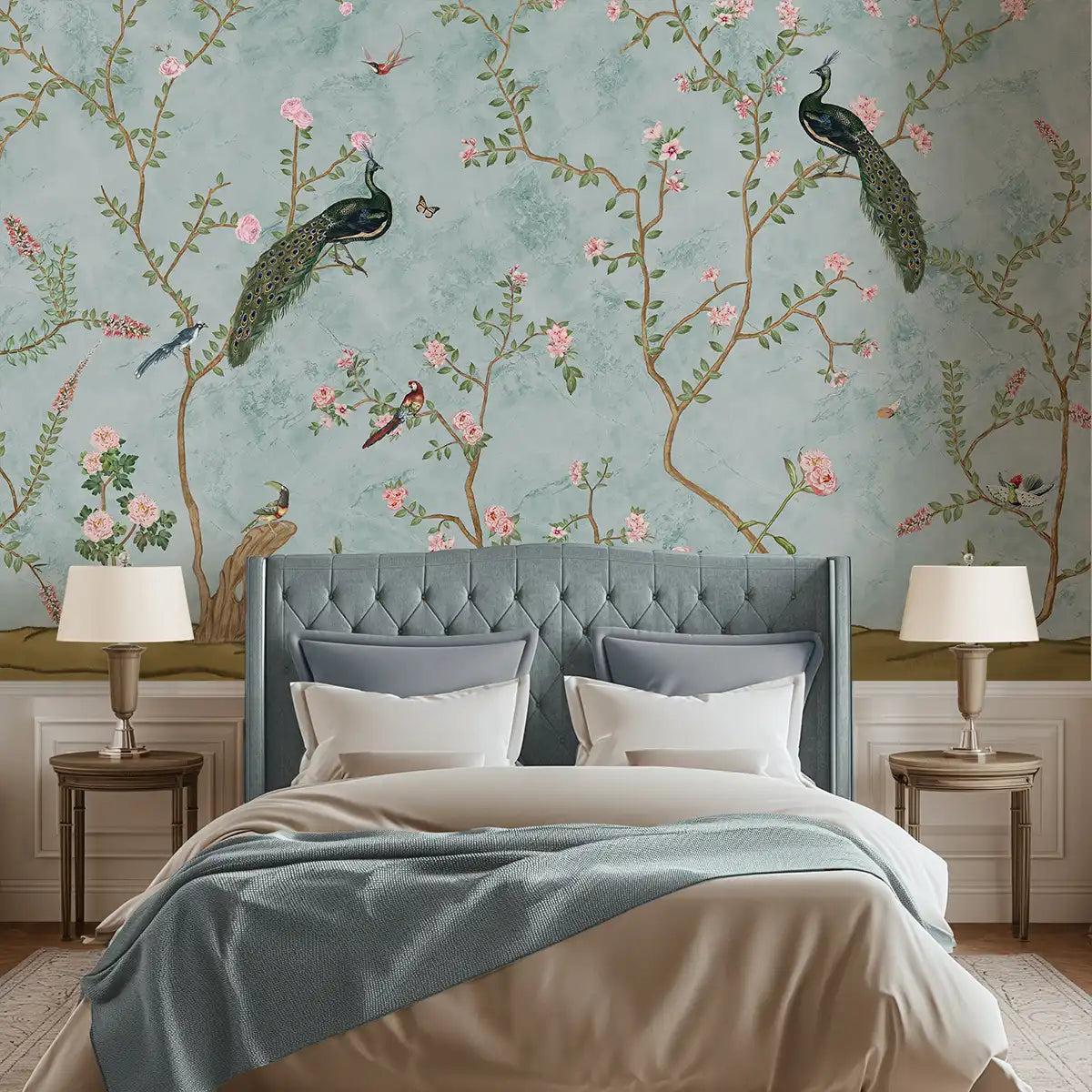
When European traders encountered Indian textiles, they didn’t see only patterns. They saw a possibility. Chintz and calico travelled by ship, finding new homes in English drawing rooms and French salons. What the West labelled as “exotic”, was simply everyday Indian life, rendered in dye and cloth.
As these patterns crossed oceans, they were adapted, renamed and reproduced. Yet the core of Indian wallpaper remained intact. Floral sprays borrowed from verdant Mughal gardens. Borders inspired by temple friezes. Symmetry grounded in centuries of visual discipline. Even when filtered through colonial tastes, Indian wallpapers still retain their pulse.
This exchange created a hybrid aesthetic which still shapes interiors today. Many contemporary wallpapers, whether acknowledged or not, owe their structure to Indian design systems. In this sense, Indian wallpaper didn’t only influence the world but it taught it how to decorate.
A Lineage That Endures
Fast forward to the present, and Indian wallpaper is experiencing a renewed appreciation. Not as a trend, but as a lineage. Designers and homeowners are returning to depth, to patterns that carry narrative rather than novelty.
At BRAHM, this lineage is the starting point. Each Indian wallpaper design begins with research, not software. A Mughal miniature. A temple mural. A block print fading softly with age. From there, the translation begins. A peacock’s curve becomes a rhythm. A garden layout becomes repetition. A story becomes surface.
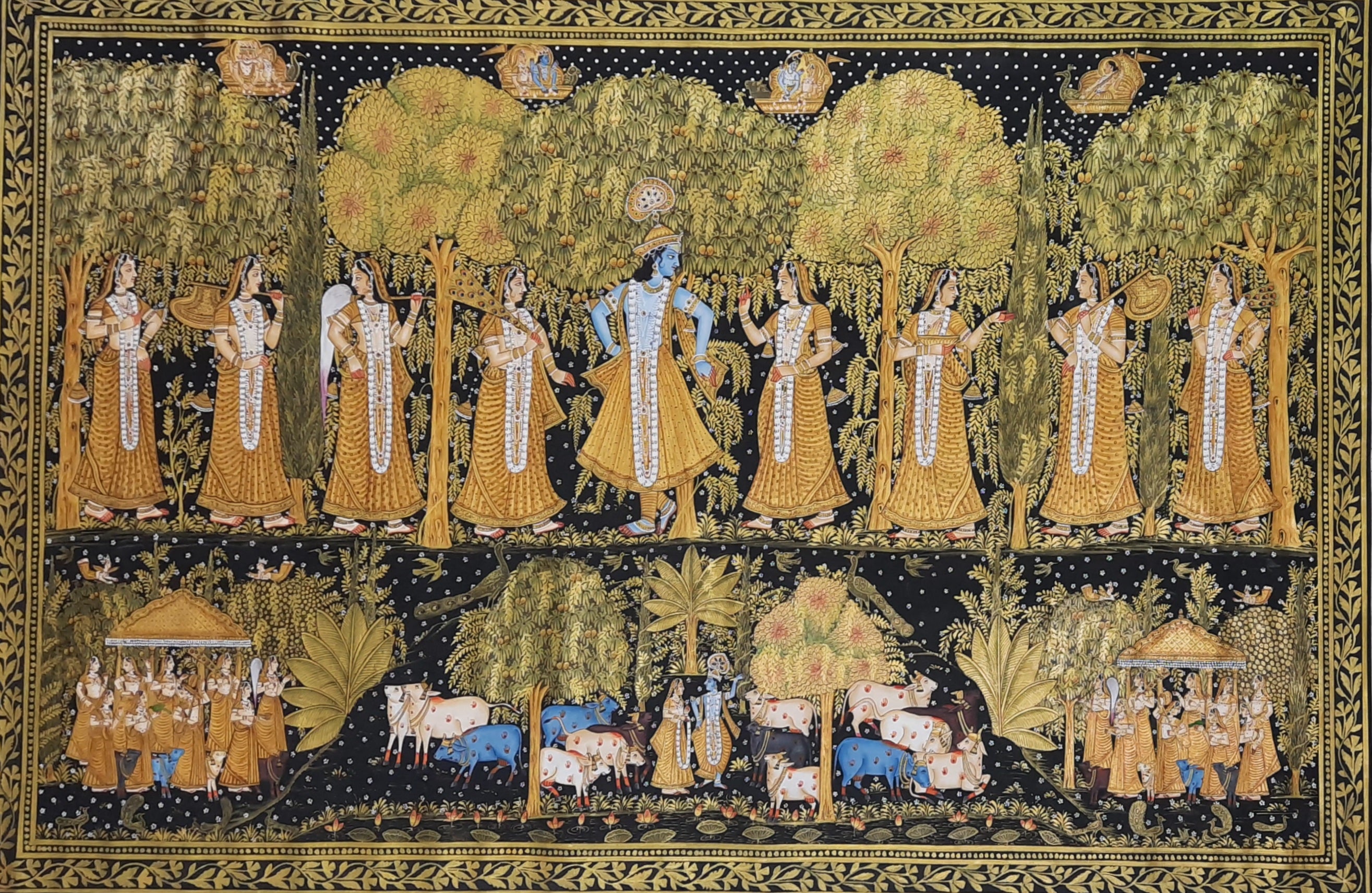
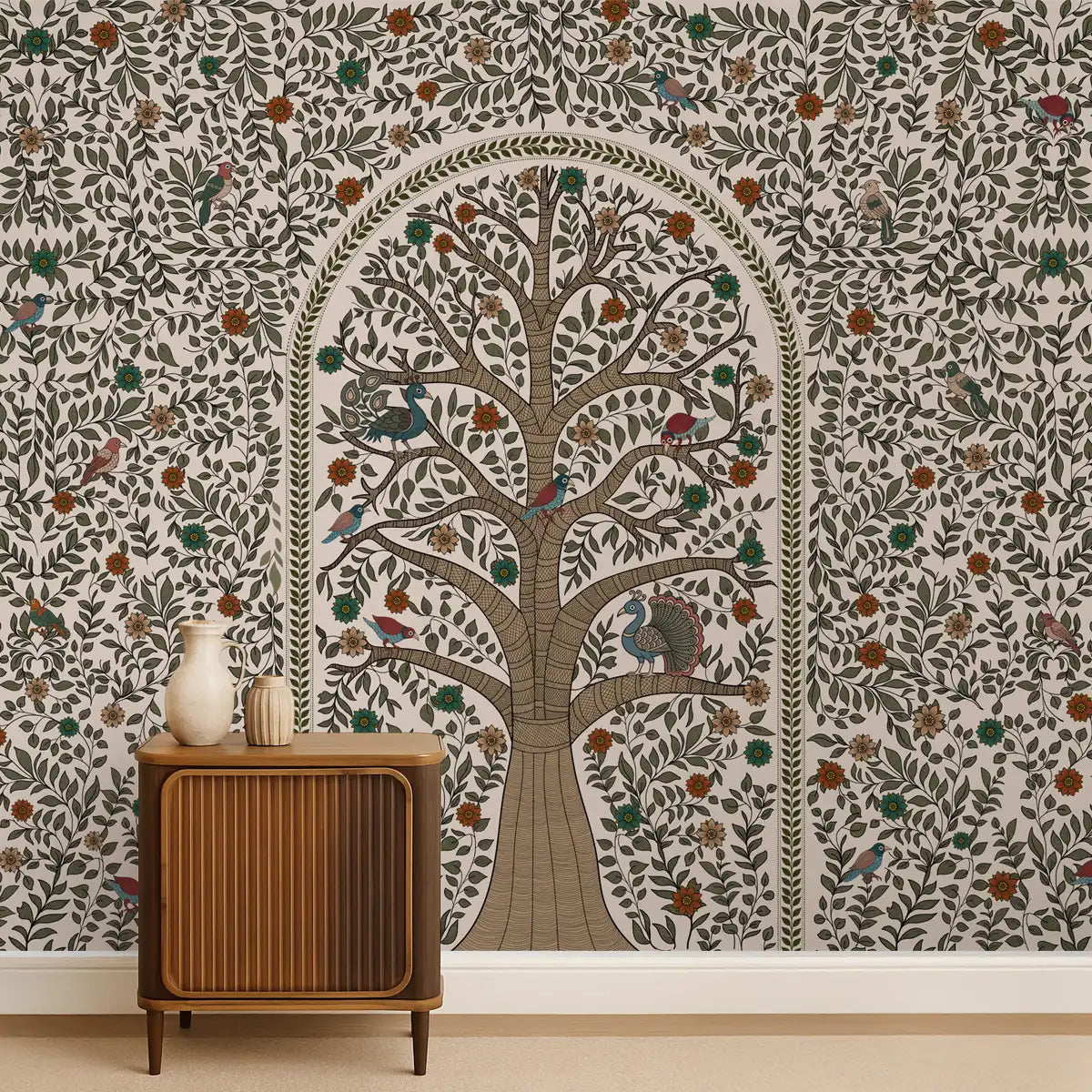
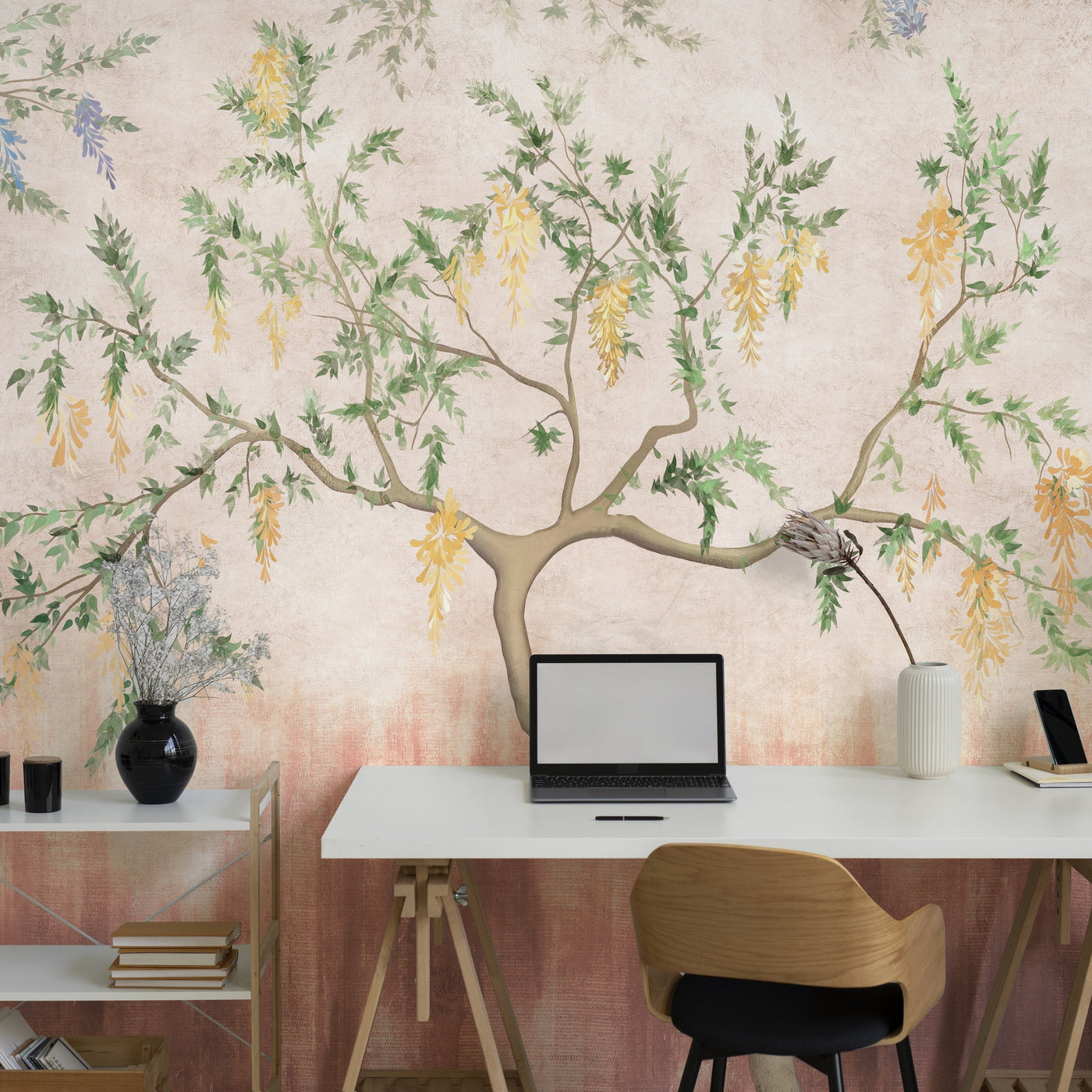
A floral Indian wallpaper might trace its roots back to a 17th-century Mughal garden, where geometry met poetry. A Pichwai-inspired Indian wallpaper echoes the devotion once brushed onto temple walls using natural indigo and ochre. Even an animal Indian wallpaper carries symbolic weight, drawn from myth, ecology and lived observation.

Technology as Continuation
Modern technology hasn’t erased the artisan. It’s extended their reach. Digital printing allows Indian wallpaper to hold intricacy once limited to hand-painted walls, while offering durability suited to contemporary homes. Fine linework. Layered colour. Depth that doesn’t shout.
Think of it not as replacement, but translation. The same care, the same respect for pattern and proportion, rendered through modern tools. When done right, Indian wallpaper retains its soul, even as its methods evolve.
How Indian Wallpaper Lives With Meaning
To live with Indian wallpaper is to live with intention. These patterns don’t disappear into the background. They settle in. They age with the space. Over time, they become part of daily rituals, morning light, evening conversations, quiet moments.
Unlike disposable trends, Indian wallpaper doesn’t demand attention. It earns it. Its repetition becomes familiar, almost meditative. Its symbolism unfolds slowly. The longer you live with it, the more it reveals.
This is why Indian wallpaper continues to resonate across generations and geographies. It isn’t anchored to a single era. It belongs wherever people value story, craft and continuity.
Where Past and Present Meet
What hangs on your wall today is not just a pattern. It’s inheritance. Each Indian wallpaper design acts as a bridge: from hand to machine, from pigment to pixel, from past to present. It holds centuries of conversation between art and space, memory and material.
Modern homes may look different, but the desire to surround ourselves with meaning hasn’t changed. Indian wallpaper endures not because it looks backward, but because it knows where it came from. It carries that knowledge forward, quietly and confidently.
Explore BRAHM’s collection of Indian wallpaper, from florals and forests to animals and traditional narratives. Each design honours centuries of Indian artistry while speaking fluently to modern living. These aren’t just wallpapers. They’re continuations of a story still being written, one wall at a time.



Leave a comment
This site is protected by hCaptcha and the hCaptcha Privacy Policy and Terms of Service apply.