







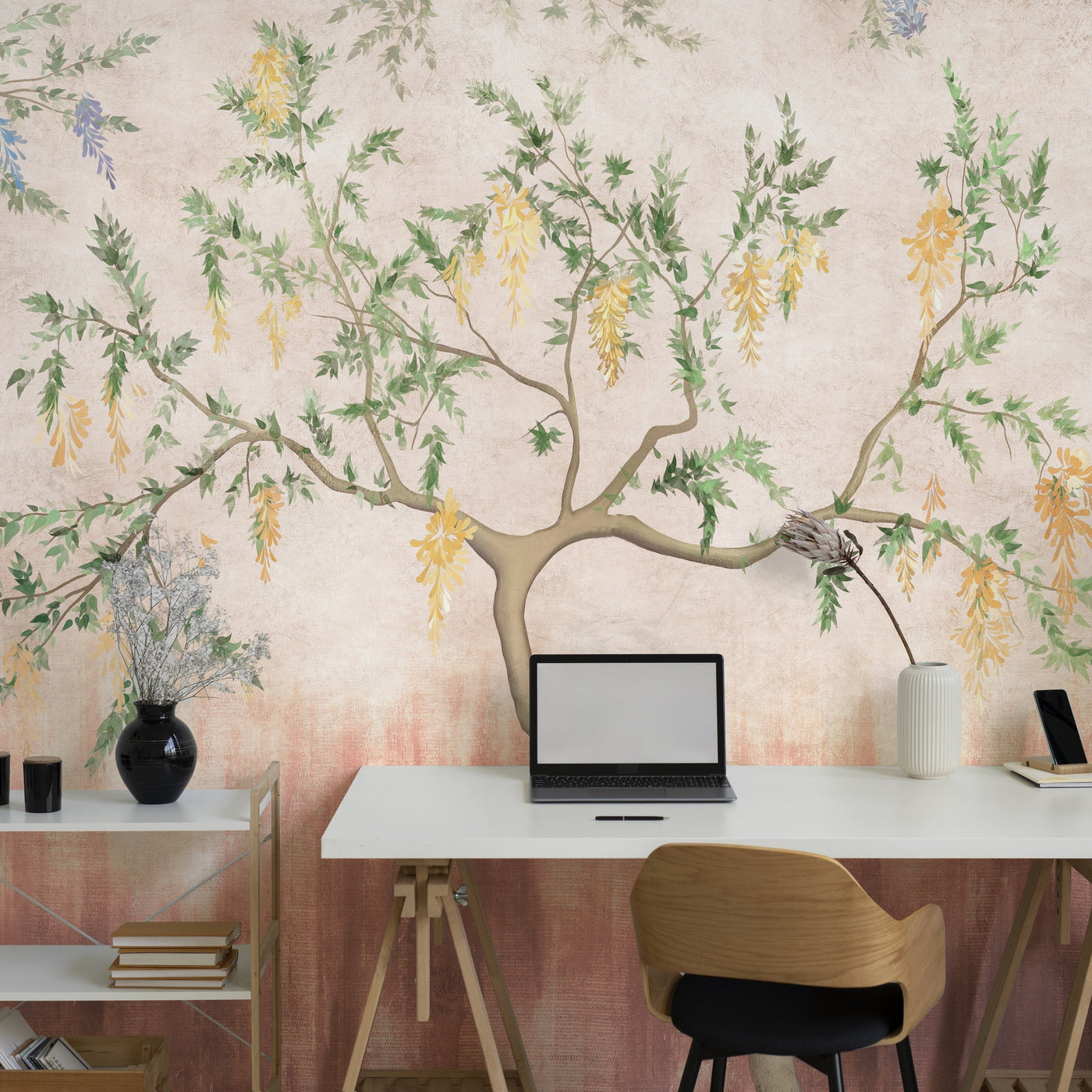
From Gardens to Walls: The Enduring Allure of Floral Wallpaper in India
In India, flowers are never just decoration. They are language, offering meaning where words fall short. They mark births and farewells, honour gods and guests, and define the atmosphere of homes and temples alike. To bring them indoors through floral wallpaper is not an aesthetic decision alone. It is a continuation of a cultural instinct: to live among symbols that carry memory, intention, and life.
For centuries, flowers have shaped how Indian spaces are imagined. Courtyards bloomed before walls were ever painted. Gardens were planned before palaces rose. When floral wallpaper appears on an Indian wall today, it does so with a lineage behind it, rooted in soil, ritual, and craft.
The Flower as a Symbol
Across the subcontinent, every bloom carries its own significance. The lotus rises from water untouched, representing creation, resilience, and divine origin. It appears beneath gods, crowns pillars, and repeats endlessly in art. Jasmine blooms after dusk, filling the air with fragrance, braided into hair and offered as gestures of affection and welcome. Marigolds, vibrant and unapologetic, are woven into garlands that signal celebration, protection, and renewal.
These flowers were never chosen at random. Their presence in art and architecture was deliberate, symbolic, and deeply embedded in daily life. Long before floral wallpaper existed, these motifs appeared in temple carvings, palace murals, and manuscript illustrations. They carried meaning from one generation to the next, transforming nature into visual language.
When flowers moved from gardens into ornament, they did not lose their power. Instead, they gained permanence. Floral wallpaper continues this transformation, taking what was once seasonal and giving it a lasting place within the home.
Gardens as Philosophy
In India, gardens were never designed solely for beauty. They were expressions of order, balance, and belief. This philosophy reached its height under the Mughals, whose gardens were structured as reflections of paradise. Water channels divided space with precision. Fruit trees offered nourishment and shade. Flowering plants provided colour, fragrance, and symbolism.
These gardens were carefully planned environments where nature and architecture existed in dialogue. Their layouts, symmetrical yet abundant, later found expression in pattern. It is no coincidence that so much floral wallpaper draws from Mughal garden design. The repeating vines, mirrored blooms, and structured trellises seen on walls today echo these historic landscapes.
To live with floral wallpaper inspired by such gardens is to bring that worldview indoors. It reflects a belief that space should feel intentional, layered, and connected to nature.
From Mughal Gardens to Modern Floral Wallpaper
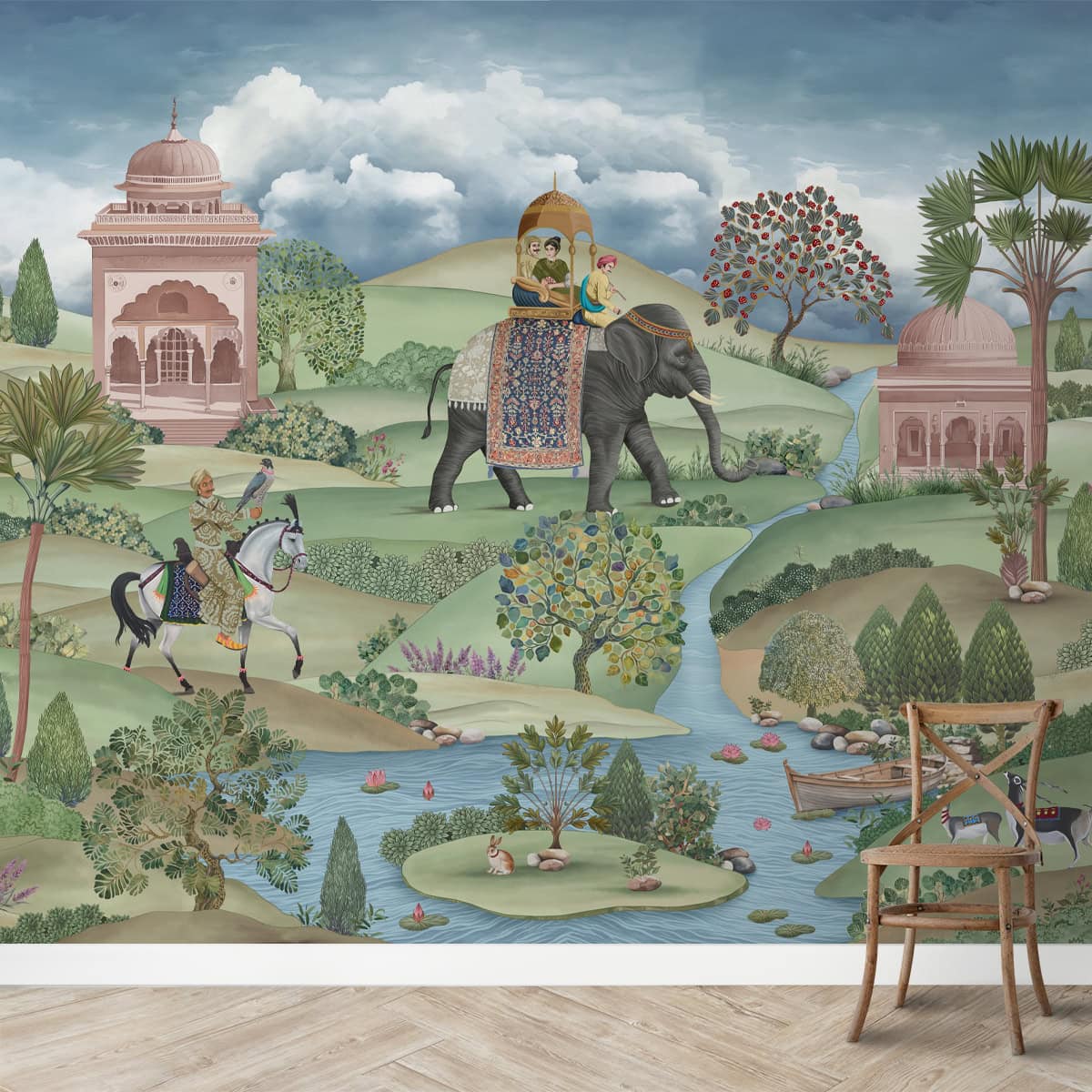
As Indian art evolved, flowers became central to its visual vocabulary. Miniature paintings depicted stylised gardens where blossoms unfolded across parchment in controlled abundance. Palace walls were covered in murals where floral borders framed scenes of courtly life. Even in domestic spaces, painted motifs softened architecture and humanised scale.
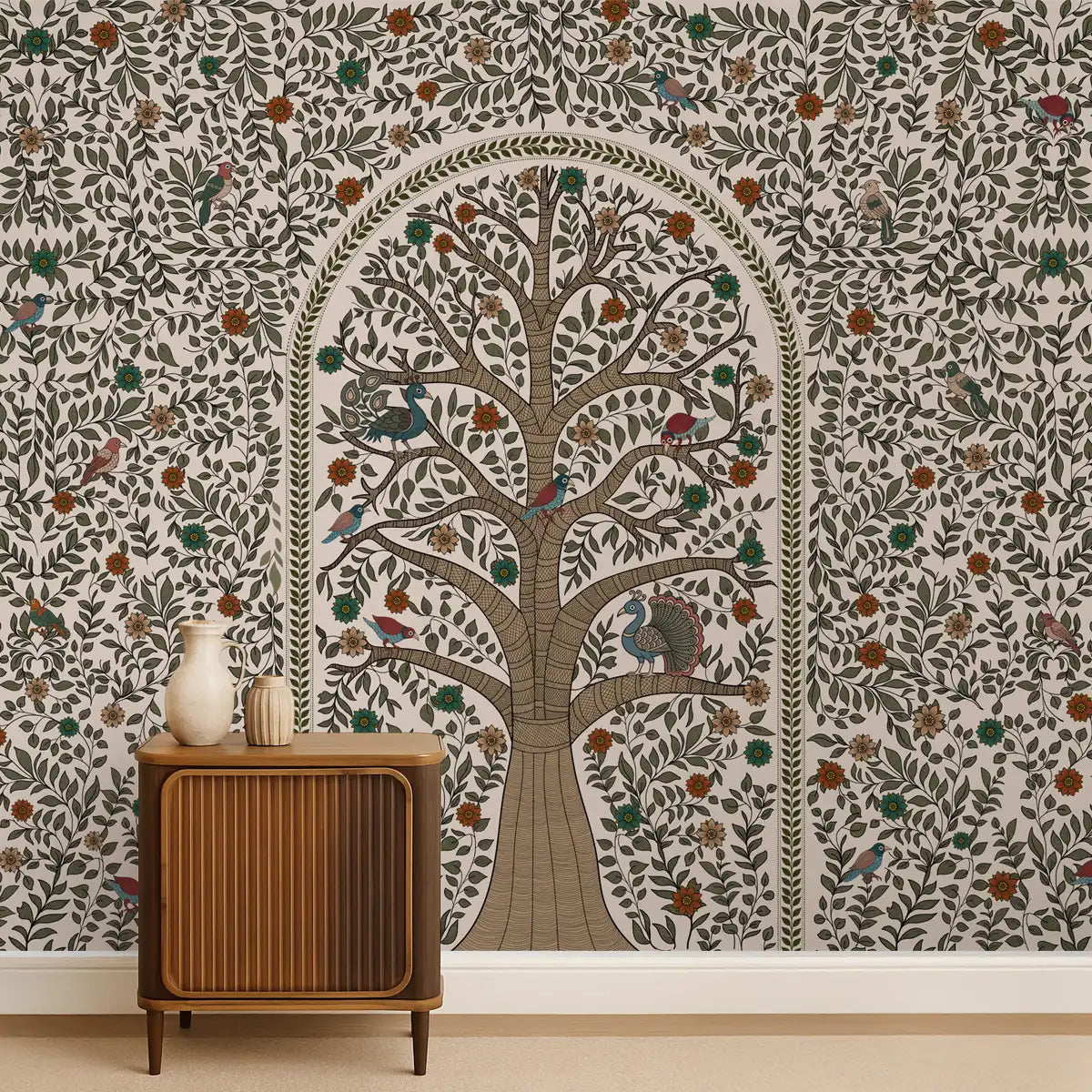
Today, floral wallpaper carries these influences forward. A traditional design may recall miniature painting techniques, flattened perspective, stylised petals, and earth-toned palettes. A contemporary floral wallpaper might reinterpret the same motifs with sharper detail and expanded scale, made possible through modern printing.
What unites them is intent. Floral wallpaper is never filler. It is chosen to shape mood, establish rhythm, and give a room identity. Whether dense with blossoms or restrained in composition, the pattern serves as a continuation of how Indian spaces have always been designed.
Craft Before Print
Before wallpaper existed, there was fabric. Handwoven cotton, dyed with natural pigments, printed with wooden blocks carved by skilled hands. Floral motifs dominated these textiles, repeating across lengths of cloth used for clothing, bedding, and wall hangings.
In places like Bagru, Sanganer, and Machilipatnam, artisans carved floral patterns into teak blocks with extraordinary precision. Each press of dye required alignment, pressure, and experience. Slight variations were not errors but signatures of the hand. These textiles laid the foundation for what would later become floral wallpaper, transferring pattern logic from fabric to wall.
This lineage matters. Even when printed digitally, floral wallpaper retains echoes of block printing: the balance of positive and negative space, the flow of vines, the repetition that feels organic rather than mechanical.
Regional Expressions in Bloom
India’s floral language is not singular. Each region carries its own visual dialect. Kashmir’s lotuses are expansive and lyrical, often paired with paisleys and layered foliage. Bengal’s creepers move fluidly, reflecting riverine landscapes and poetic traditions. Tamil Nadu’s jasmine chains are structured yet intimate, drawn from temple offerings and domestic rituals.
At BRAHM, these regional expressions form the backbone of every floral wallpaper collection. Research begins with archival references, textile samples, and architectural details. Motifs are studied not just for appearance, but for origin and use. The aim is not replication, but translation.
A BRAHM floral wallpaper does not borrow casually. It carries forward the logic of the original motif, adapting scale, colour, and composition to suit contemporary interiors while preserving cultural integrity.
Technology as a Tool, Not a Replacement
Modern printing technology has expanded what floral wallpaper can achieve. Fine linework, layered colour, and large-scale repeats are now possible without sacrificing detail. This allows floral motifs once limited to murals or textiles to be applied seamlessly across walls.
Yet technology does not replace craft. It amplifies it. When a floral wallpaper design begins with hand-drawn elements and historical study, digital tools become a means of precision, not dilution. The result is wallpaper that feels intentional, dimensional, and grounded in process.
In this way, floral wallpaper becomes a bridge between eras, honouring handwork while embracing modern durability and scale.
Why Flowers Continue to Matter
Flowers endure in Indian design because they speak to cycles of life. They bloom, fade, and return. They mark time without fixing it. In a world that moves quickly, floral wallpaper offers continuity without nostalgia.
To live with floral wallpaper is to accept pattern as part of daily life. It does not compete with furniture or architecture. It supports them. It creates atmosphere through repetition and form, reminding us that beauty does not need to be temporary to feel alive.
This is why floral wallpaper appears across generations and geographies. It adapts without losing its essence. It feels familiar without becoming predictable.
Choosing Floral Wallpaper Today
In contemporary homes, floral wallpaper plays many roles. It can anchor a room, soften edges, or introduce narrative where walls might otherwise feel blank. In bedrooms, it creates intimacy through pattern. In living spaces, it establishes character. In studies and corridors, it turns transition into experience.
Choosing floral wallpaper is an act of intention. It reflects a desire to live with surfaces that carry meaning rather than emptiness. When drawn from Indian traditions, it also becomes a way of honouring craft and continuity.
Featured Floral Wallpaper
Walls That Bloom Again
A floral wallpaper from BRAHM carries forward a long conversation between artisans, architects, and nature itself. It transforms walls into living surfaces, rooted in Indian soil and imagination. Each pattern is a reminder that design can evolve without severing its origins.
Explore BRAHM’s floral wallpaper collection to discover how tradition and modernity can coexist on your walls. From historic motifs to contemporary interpretations, each design reflects centuries of cultural knowledge translated for the present.
These walls do not merely display flowers. They allow them to bloom again, enduring, meaningful, and deeply Indian.



Leave a comment
This site is protected by hCaptcha and the hCaptcha Privacy Policy and Terms of Service apply.