






 Enquire About This Piece
 Instagram
 Email
Email
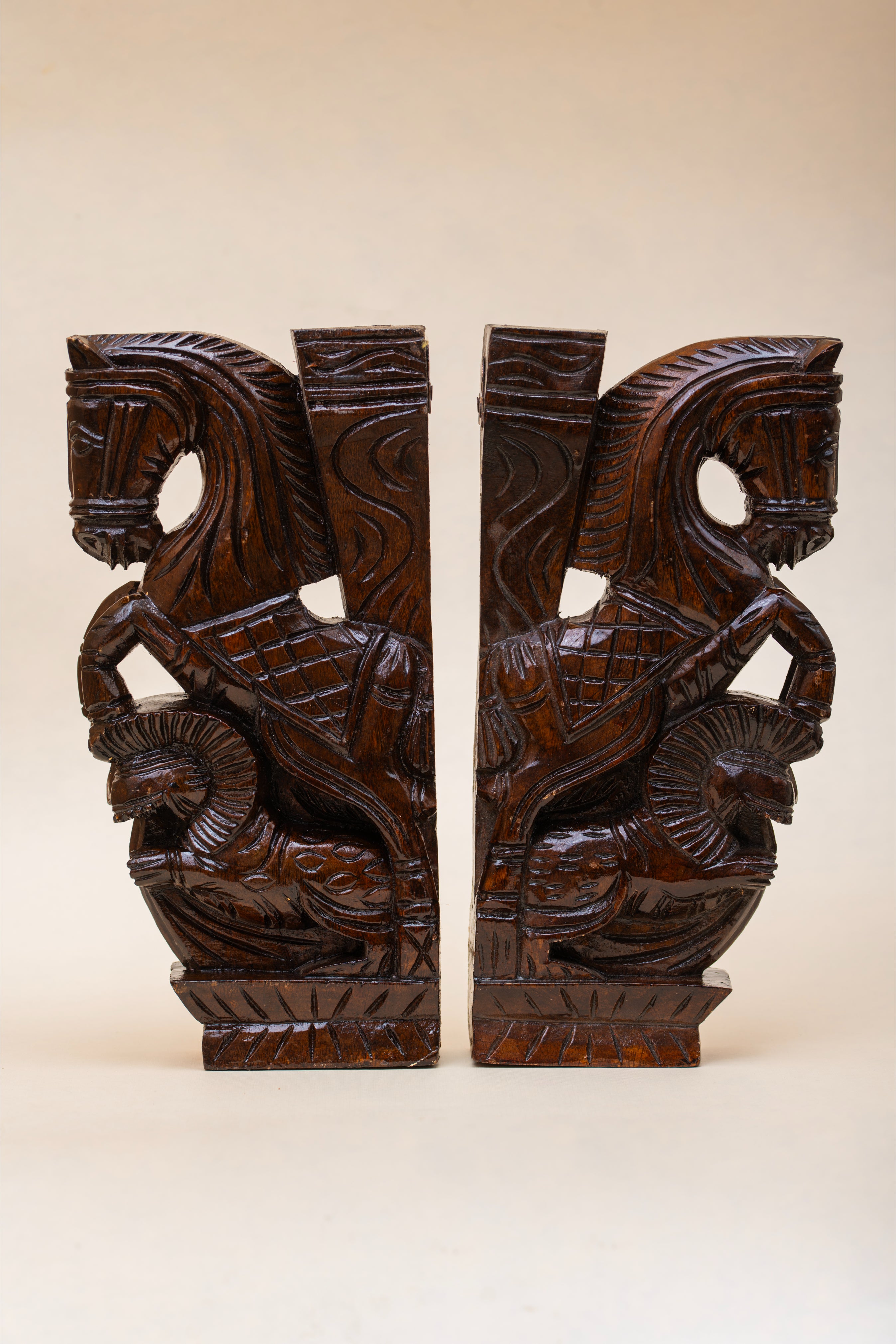
The Ashva Dwaar draws from the enduring symbolism of the horse in Indian thought and artistic tradition. In Vedic literature and classical iconography, the ashva represents vitality, strength, momentum, and purposeful movement. It is associated not merely with speed, but with directed energy — motion guided by awareness and discipline. The dwaar, meaning threshold or doorway, signifies transition: the point between departure and arrival, past and possibility.
Across South Indian architectural traditions, particularly in Karnataka, entrances have long been treated as meaningful spaces rather than simple passages. Doorways and lintels were often adorned with symbolic carvings intended to mark transition, offer protection, and invoke auspicious energy. The placement of sculptural forms at thresholds acknowledges that crossing from one space to another carries psychological and spiritual significance.
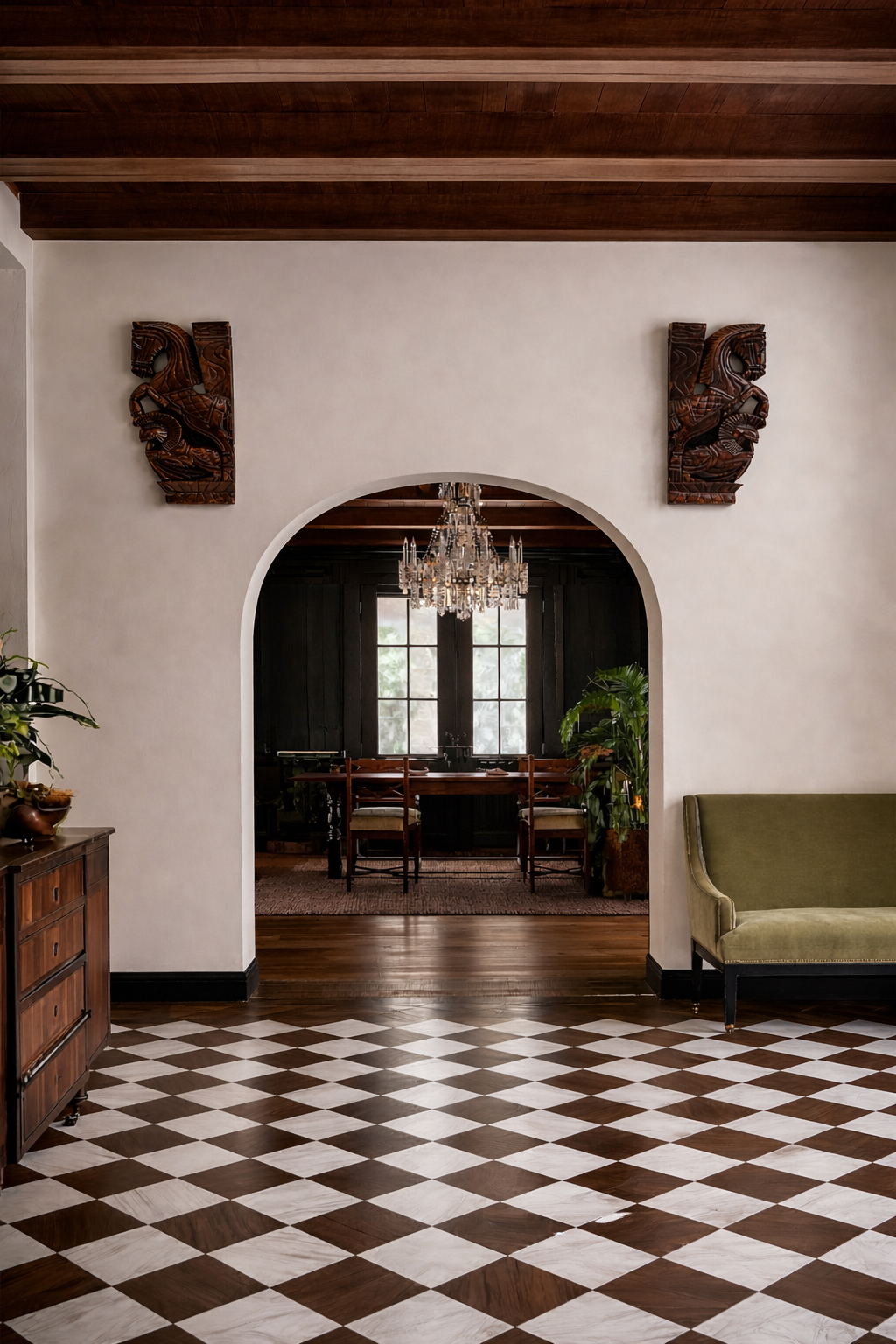
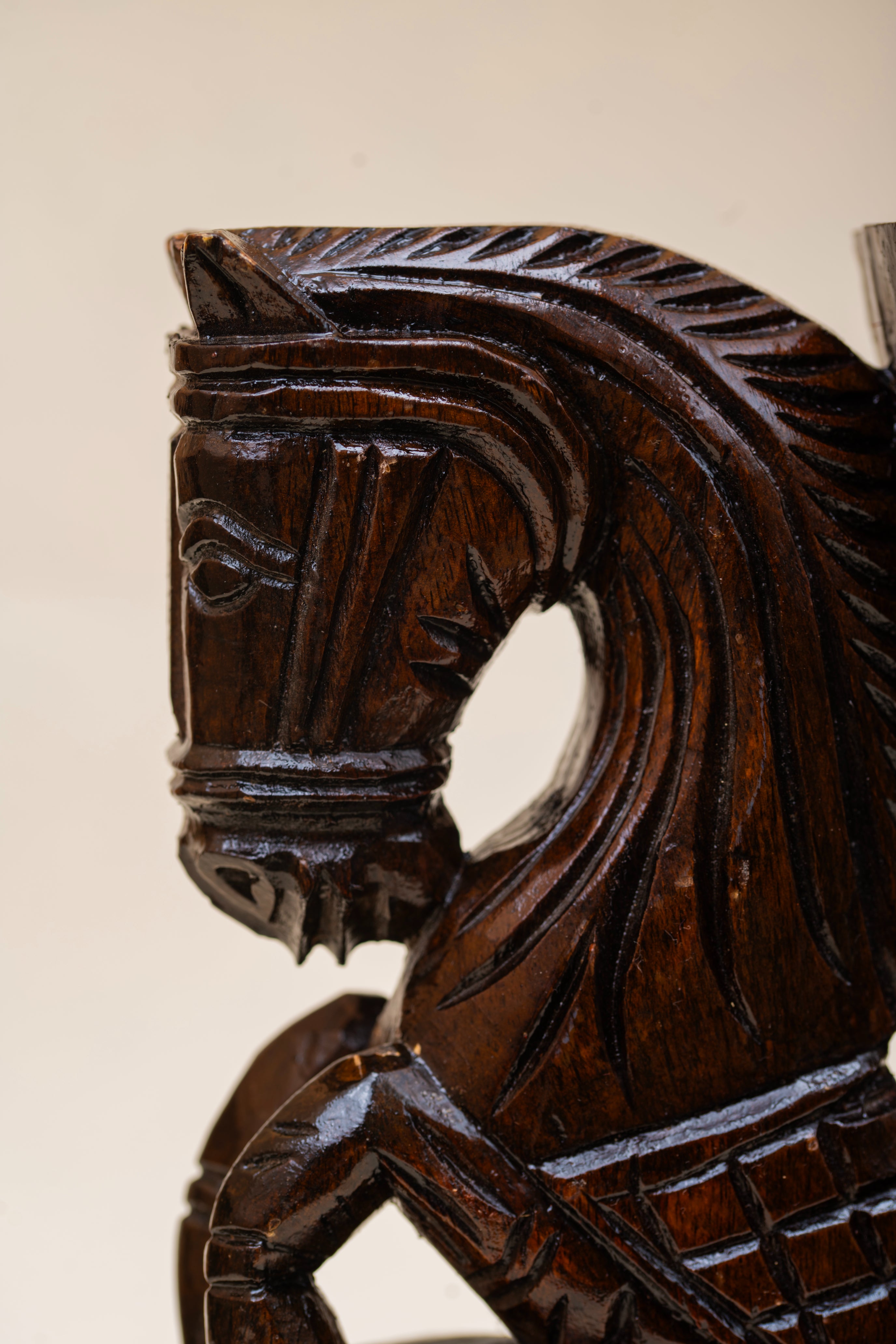
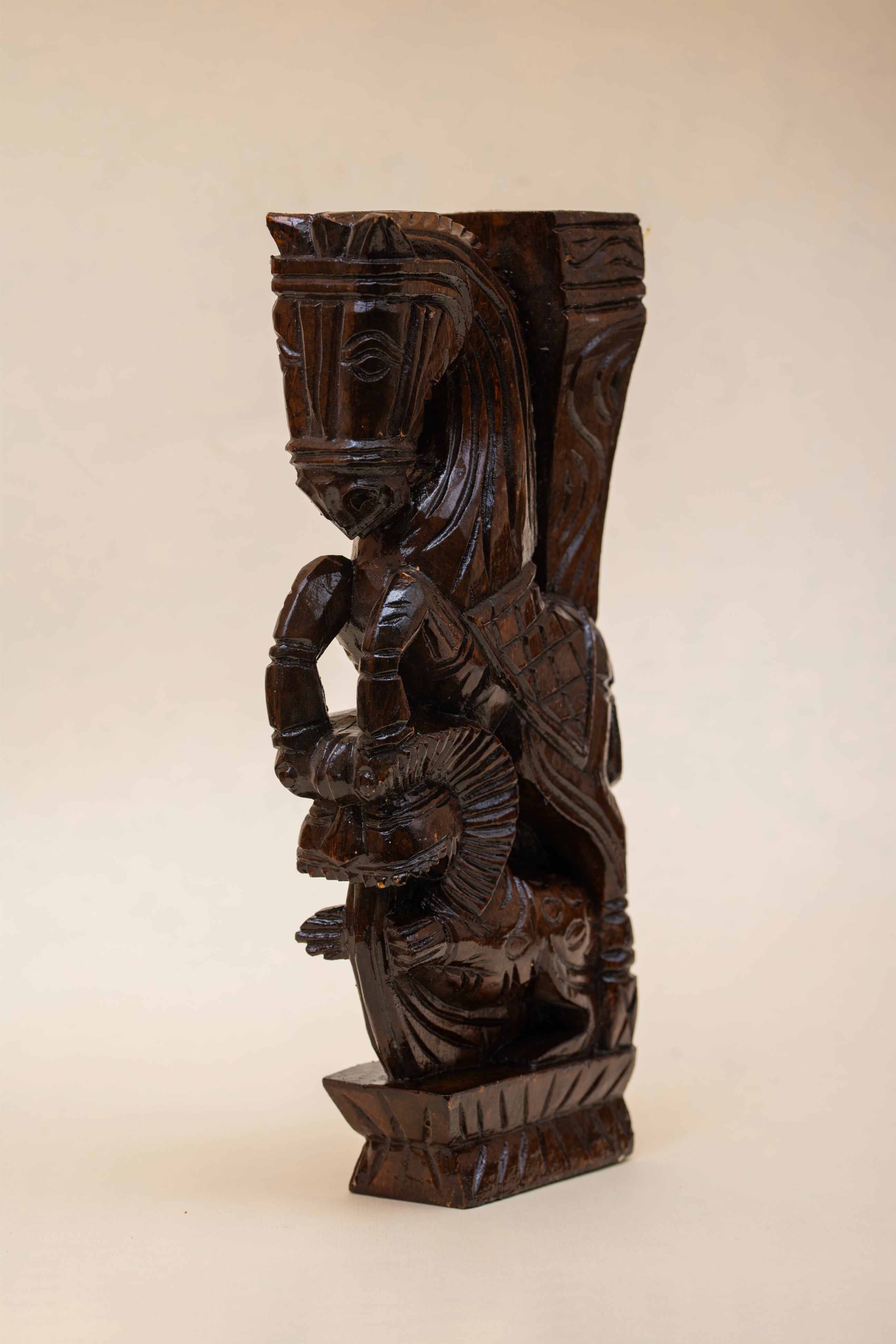
This handcrafted wooden wall hanging reinterprets that tradition in a contemporary context. Carved with deliberate restraint, the ashva is presented not in gallop, but in readiness — embodying contained power rather than impulsive motion. The warmth of wood softens the dynamism of the figure, grounding it in steadiness and balance. Subtle variations in grain and carving ensure that each piece carries its own quiet individuality.
Rooted in Karnataka’s woodcraft heritage, the Ashva Dwaar Wall Hanging serves as both symbol and marker — an intentional presence at points of transition, reminding the viewer that every threshold invites mindful movement forward.
Comes as a pair
Disclaimer
- This wall panel is handcrafted from natural wood. Variations in grain, tone, minor surface textures, or carving nuances are inherent to the material and artisanal process.
- These distinctions are not defects but part of the authenticity and individuality of each piece.
- Dimensions and weight are approximate due to the handmade nature of the work.


