






'Bahar' Decorative Tissue Box in Printed Wood
Free worldwide shipping | US customers: No surprise tariffs
 Enquire About This Piece
 Instagram
 Email
Email
BRAHM X Karo
Delivered from India | Estimated Delivery time: 2 to 3 weeks
Etymology
In Your Home
Shipping Policy
Free worldwide shipping | Exempt from US tariffs
Delivered in secure, protective packaging with full insurance to ensure safe arrival.
Accent pieces involve intricate, time-intensive processes, moving through stages of shaping, finishing, and refinement. Materials and finishes may require time to settle, cure, or be sealed before dispatch, with slight variations based on conditions and workshop processes.
Approximate Making and Shipping Timeline:
Accent production: 2-3 weeks
Domestic delivery (within India): 3–5 days
International delivery: 1 week
Read our full delivery and fulfilment policy.
Provenance
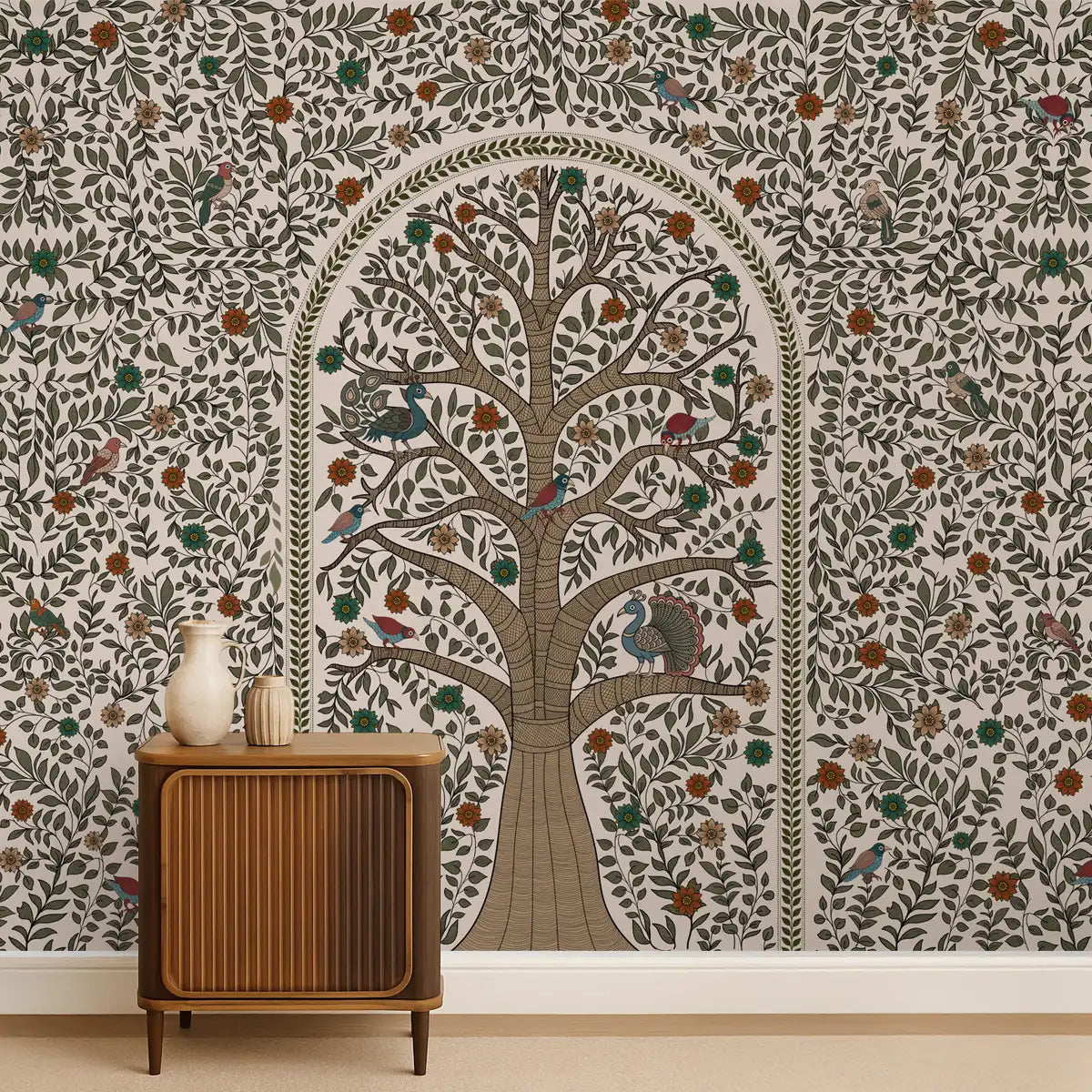
The Bahar tissue box cover draws its surface vocabulary from the tradition of Rajasthani haveli mural painting — specifically the decorated interiors of historic merchant mansions in the Shekhawati region, where entire rooms were covered in bold-ground murals depicting gardens, mythological narratives, birds, and flowering forms. Shekhawati's painted havelis — concentrated in towns such as Nawalgarh, Mandawa, and Fatehpur — represent one of the most extensive surviving bodies of mural painting in India, with traditions that date from the seventeenth century and reached their fullest expression in the eighteenth and nineteenth centuries.
The garden (bagh) is a recurring subject in this tradition: not merely depicted as a setting but treated as an ornamental vocabulary in itself — flowers, trees, and birds arranged in registers that follow the same compositional logic as a woven carpet or a manuscript border. The chinar tree (Platanus orientalis), emblematic of Kashmiri garden design and present across Mughal garden iconography, brings a Central Asian note into this Rajasthani repertoire. The surface of Bahar holds both registers: the floral density of the haveli mural and the ordered garden of the classical tradition.
The piece is printed on wood and finished waterproof under resin — suitable for desk, vanity, or tabletop. Accepts a standard tissue insert through the open top. Each box is individually handcrafted; minor variations in colour are expected.
Disclaimer
- These pieces are handcrafted in wood with a printed surface. Variations in tone and colour are a natural feature of the process.
- Minor differences in print registration or surface texture should be understood as the signature of individual craft, not a defect.
Choose options
In Real Homes
No customer photos yet.