






'Champa' Jar in Wood and Metal
US customers: No surprise tariffs
 Enquire About This Piece
 Instagram
 Email
Email
BRAHM X Karo
Delivered from India | Estimated Delivery time: 2 to 3 weeks
Etymology
In Your Home
Shipping Policy
Exempt from US tariffs
Delivered in secure, protective packaging with full insurance to ensure safe arrival.
Accent pieces involve intricate, time-intensive processes, moving through stages of shaping, finishing, and refinement. Materials and finishes may require time to settle, cure, or be sealed before dispatch, with slight variations based on conditions and workshop processes.
Approximate Making and Shipping Timeline:
Accent production: 2-3 weeks
Domestic delivery (within India): 3–5 days
International delivery: 1 week
Read our full delivery and fulfilment policy.
Provenance
The Champa jar belongs to the North Indian mixed-media workshop tradition — turned and printed wood bodies combined with cast metal figures and stone elements to produce ornamental accent objects. The wood body carries a floral surface print on an antique gold ground, sealed under lacquer; the cast metal figure caps the lid. The tradition comes from workshops in Rajasthan and western Uttar Pradesh where multiple craft skills combine in single objects.
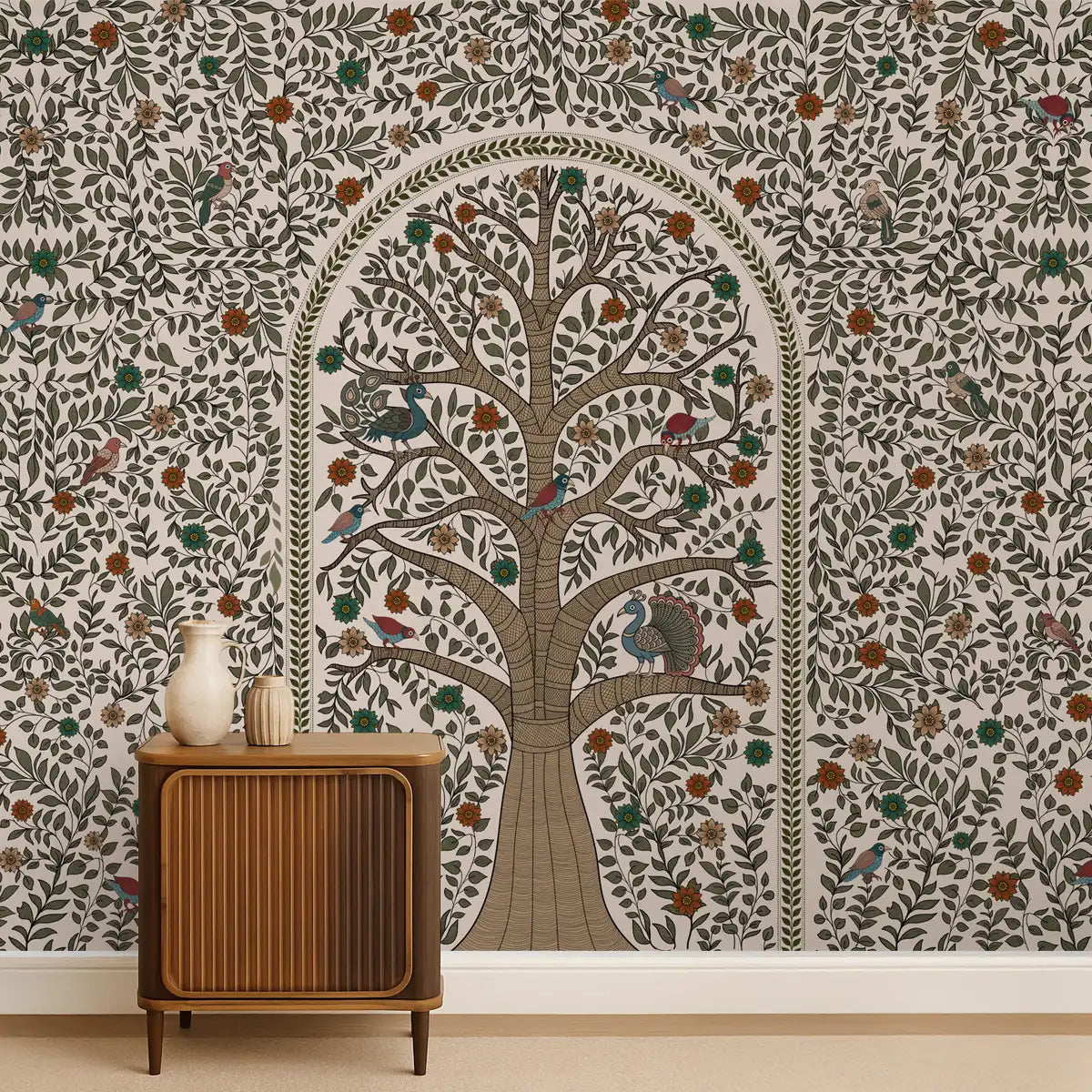
The surface ornament on Champa draws from the floral vocabulary of Indian ornamental tradition — the dense, warm-ground flower forms that appear in the painted interiors of Rajasthani havelis, in Mughal manuscript borders, and in the surface decoration of lacquered court objects. The antique gold ground gives the floral motifs a quality of aged warmth — the colour of old gold, the tone of surfaces that have been used and valued over time. Champa is the Sanskrit name for the champak tree (Michelia champaca), whose intensely fragrant, small yellow-gold flowers are among the most celebrated in Indian botanical and poetic tradition — the flower of warmth, fragrance, and the domestic offering.
The waterproof surface suits display use. Not airtight. Each piece is individually handcrafted; minor variations between pieces are expected.
Disclaimer
- These jars combine hand-printed wood, cast metal, and stone elements. Variations in print tone and metal finish are natural features of the process.
- Minor surface imperfections are characteristic of handcrafted work and are not defects.
Choose options
In Real Homes
No customer photos yet.