






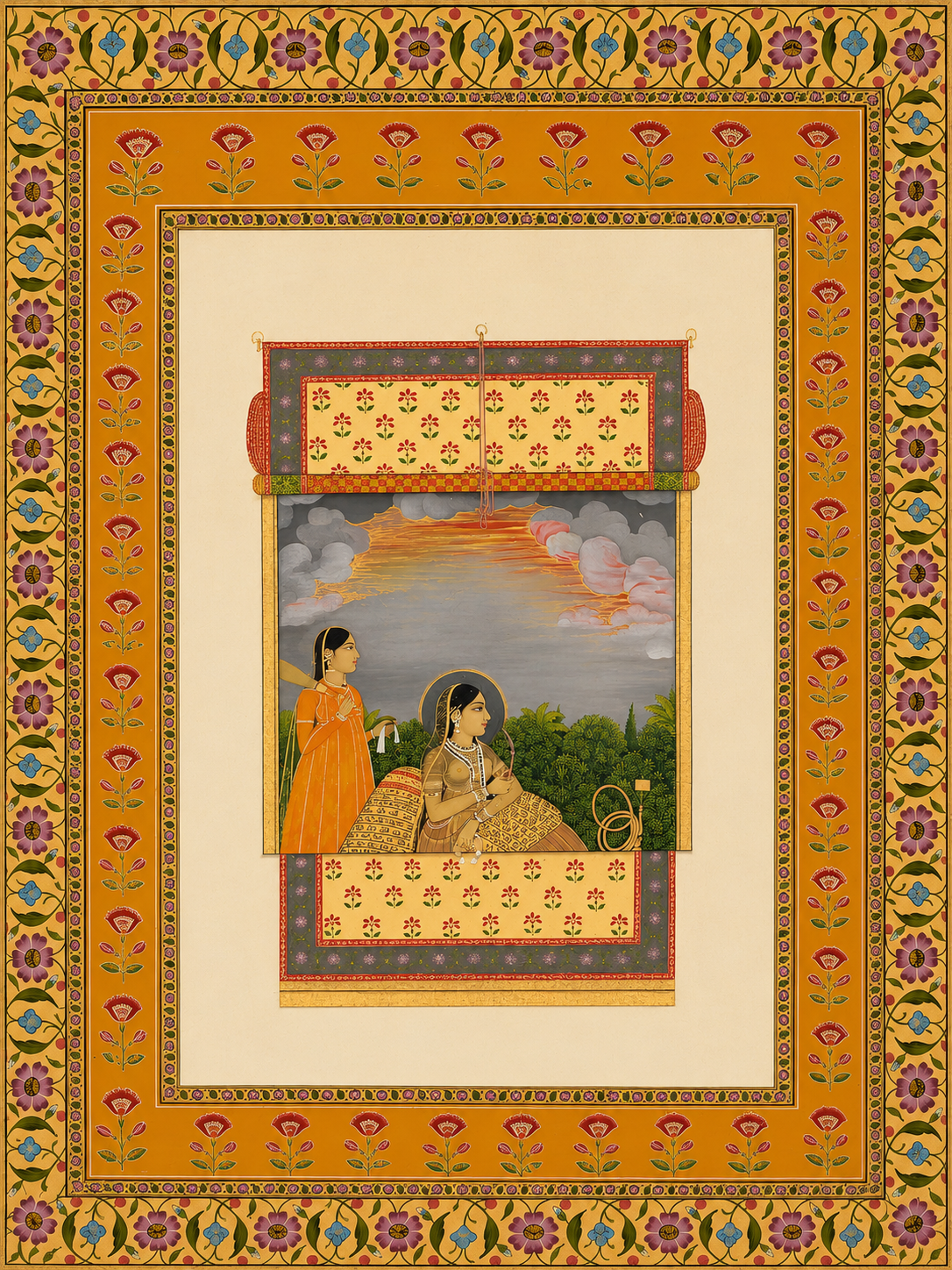

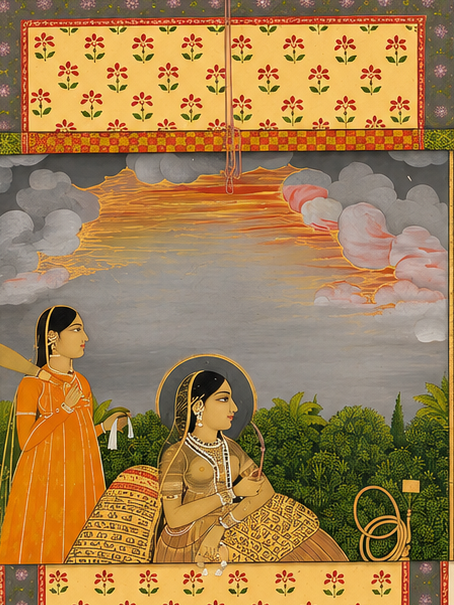
'Princess and Attendant in a Trompe l'Oeil Window' Canvas Cloth Print, c.1765
Free worldwide shipping | US customers no surprise tariffs
 Enquire About This Piece
 Instagram
 Email
Email
Arrives Exactly as Expected
Quality Control
Every painting is carefully inspected by our team before dispatch.
If requested, we'll also send you a photo for approval before shipping.
Secure Shipping
Each piece is shipped in a rigid protective tube to reach you safely.
Our team personally inspects each piece before dispatch.
Customer Service
Our London team is on hand to assist with any queries or issues.
We resolve concerns directly to ensure your satisfaction.
Shipping Policy
Free worldwide shipping | Exempt from US tariffs
Delivered in a protective hard-case tube with full insurance to ensure it arrives safely and undamaged.
Our prints are created using layered hand application, traditional pigments and natural binders. Drying and curing times vary depending on humidity, temperature and seasonal conditions.
Read our full delivery and fulfilment policy.
Provenance
A golden shade rolls up to reveal a princess seated on a terrace, her attendant beside her, the wooded grounds of the palace extending behind them. The composition inverts a familiar convention: where the jharokha window usually places the viewer outside looking in at a royal figure, here the viewer stands inside the palace, looking out at the women on the terrace beyond. The carpet draped over the sill echoes the imperial balcony, but the direction of looking has turned.
The print is attributed to Aqil Khan, active in the mid-18th century, and comes from the court at Lucknow — one of the last great centres of Mughal court culture in northern India. By the mid-18th century the central Mughal empire had fragmented, and its successor courts at Lucknow and elsewhere became centres of refined print that extended the Mughal idiom in new directions.
The taste for flowering plants on a plain ground, visible in the carpet and textiles, was a fashion introduced at the Mughal court in the 17th century and derived from European botanical studies brought to India by merchants and diplomats. By the time this print was made, that influence had been entirely absorbed and transformed into something unmistakably Indian.
Arrives Exactly as Expected
Quality Control
Every print is carefully inspected by our team before dispatch.
If requested, we’ll also send you a photo for approval before shipping.
Secure Shipping
Each piece is shipped in a rigid protective tube to reach you safely.
Our team personally inspects each piece before dispatch.
Customer Service
Our London team is on hand to assist with any queries or issues.
We resolve concerns directly to ensure your satisfaction.
Choose options