






'Surabhi' Tea Box in Printed Wood
US customers: No surprise tariffs
 Enquire About This Piece
 Instagram
 Email
Email
BRAHM X Karo
Delivered from India | Estimated Delivery time: 2 to 3 weeks
Etymology
In Your Home
Shipping Policy
Exempt from US tariffs
Delivered in secure, protective packaging with full insurance to ensure safe arrival.
Accent pieces involve intricate, time-intensive processes, moving through stages of shaping, finishing, and refinement. Materials and finishes may require time to settle, cure, or be sealed before dispatch, with slight variations based on conditions and workshop processes.
Approximate Making and Shipping Timeline:
Accent production: 2-3 weeks
Domestic delivery (within India): 3–5 days
International delivery: 1 week
Read our full delivery and fulfilment policy.
Provenance
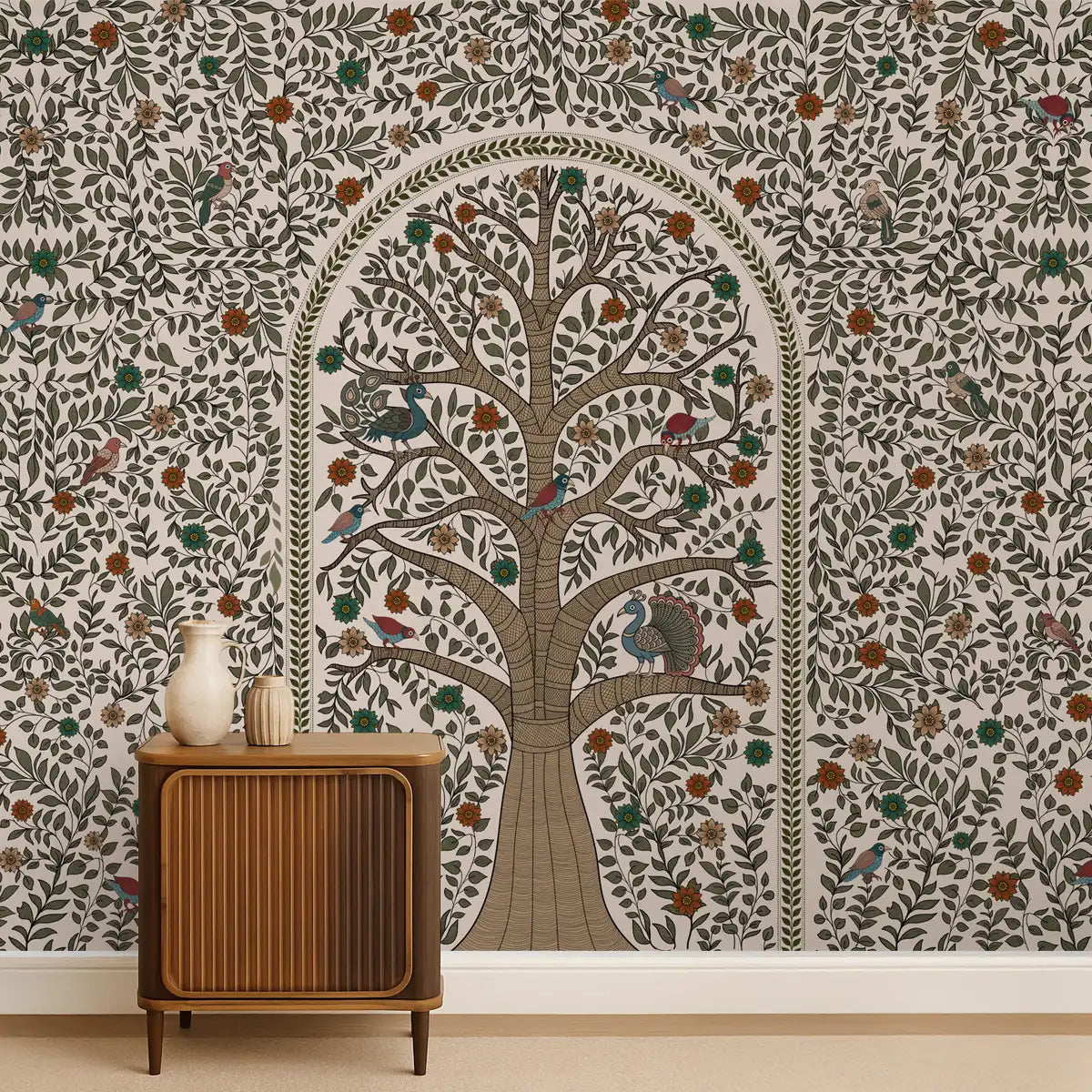
The Surabhi tea box belongs to the North Indian tradition of decorative woodware — wooden forms treated with surface print and sealed under a waterproof lacquer. Each box is individually cut and worked in wood, its surface printed with a floral ornamental pattern and sealed under resin. The tradition comes from workshops in Delhi NCR and western Uttar Pradesh, where the vocabulary of India's painted woodwork is adapted to contemporary domestic storage forms including tea bag boxes, tissue covers, and coasters.
The surface print on Surabhi draws from the floral vocabulary of the night-jasmine — Nyctanthes arbor-tristis, the flower that opens only at dusk and falls before dawn. The night-jasmine (paarijaat or harshingar) has been present in Indian botanical illustration since the Mughal period, catalogued in the margins of court manuscripts and depicted in temple courtyard plantings across the subcontinent. It is the flower of the evening hour — the same hour as the cup of tea, the time when the day's work ends and something warm and considered begins. Surabhi in Sanskrit names the quality of sweet fragrance — the cow of plenty in Vedic mythology whose milk flows without limit, and by extension anything that is fragrant and giving.
The waterproof surface makes this decorative wooden tea box suited to everyday counter and shelf use. Each piece is individually handcrafted; print placement and colour tone may vary slightly between pieces.
Disclaimer
- These pieces are handcrafted in wood with a printed surface. Variations in tone and colour are a natural feature of the process.
- Minor differences in print registration or surface texture should be understood as the signature of individual craft, not a defect.
Choose options
In Real Homes
No customer photos yet.