






'Taus' Jar Set of 2 in Wood and Metal
US customers: No surprise tariffs
 Enquire About This Piece
 Instagram
 Email
Email
BRAHM X Karo
Delivered from India | Estimated Delivery time: 2 to 3 weeks
Etymology
In Your Home
Shipping Policy
Exempt from US tariffs
Delivered in secure, protective packaging with full insurance to ensure safe arrival.
Accent pieces involve intricate, time-intensive processes, moving through stages of shaping, finishing, and refinement. Materials and finishes may require time to settle, cure, or be sealed before dispatch, with slight variations based on conditions and workshop processes.
Approximate Making and Shipping Timeline:
Accent production: 2-3 weeks
Domestic delivery (within India): 3–5 days
International delivery: 1 week
Read our full delivery and fulfilment policy.
Provenance
The Taus jars belong to the North Indian mixed-media workshop tradition — a practice of combining turned and printed wood bodies with cast metal figures and stone elements to produce ornamental accent objects. The wood body is surface-printed with a floral pattern and sealed under lacquer; the cast metal peacock figure is fitted to the lid, forming the finial of each jar. Stone elements complete the material composition. The tradition comes from workshops in Rajasthan and western Uttar Pradesh, where multiple craft skills — printing, metal casting, stone setting — combine in single objects.
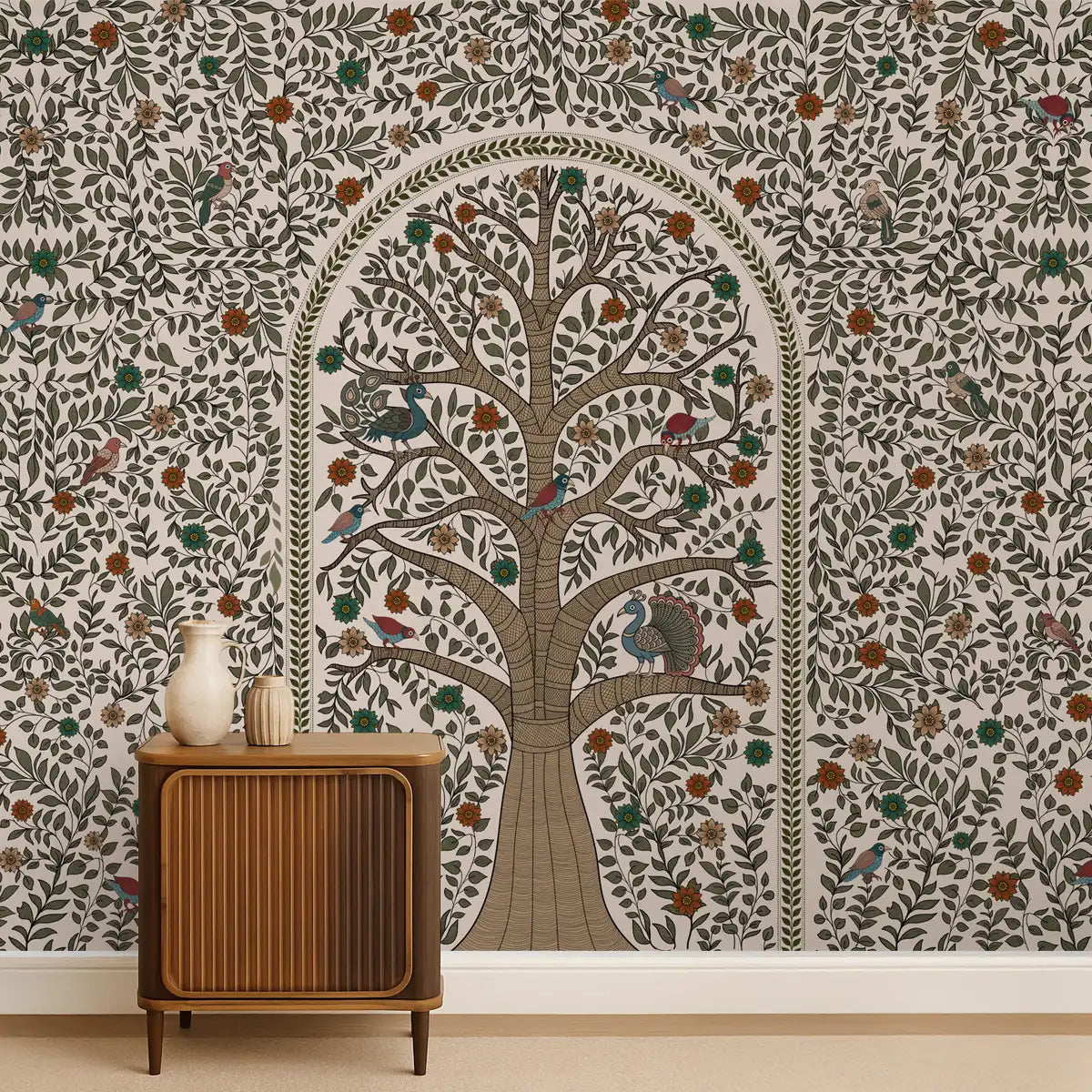
The surface ornament on Taus combines two motifs from the Persian-Mughal decorative vocabulary: the cypress tree (sarv in Persian — the tall, narrow tree that stands at the centre of Mughal garden design, its form emblematic of immortality and upright dignity) and the flowering vine tradition of Indian decorative art. The peacock figure that tops each jar draws from the Indian iconographic tradition in which the peacock is the emblem of divine playfulness and natural beauty — the bird worn by Krishna in his crown, the subject of temple carvings from Belur to Khajuraho. Taus is the Arabic and Persian word for the peacock.
The waterproof surface suits display use. These are decorative accent jars, not airtight storage. Each piece is individually handcrafted; print placement and the finish of the cast metal figures may vary slightly between pieces.
Disclaimer
- These jars combine hand-printed wood, cast metal, and stone elements. Variations in print tone and metal figure finish are natural features of the process.
- Minor surface imperfections are characteristic of handcrafted work and are not defects.
Choose options
In Real Homes
No customer photos yet.