








 Enquire About This Piece
 Instagram
 Email
Email
Provenance
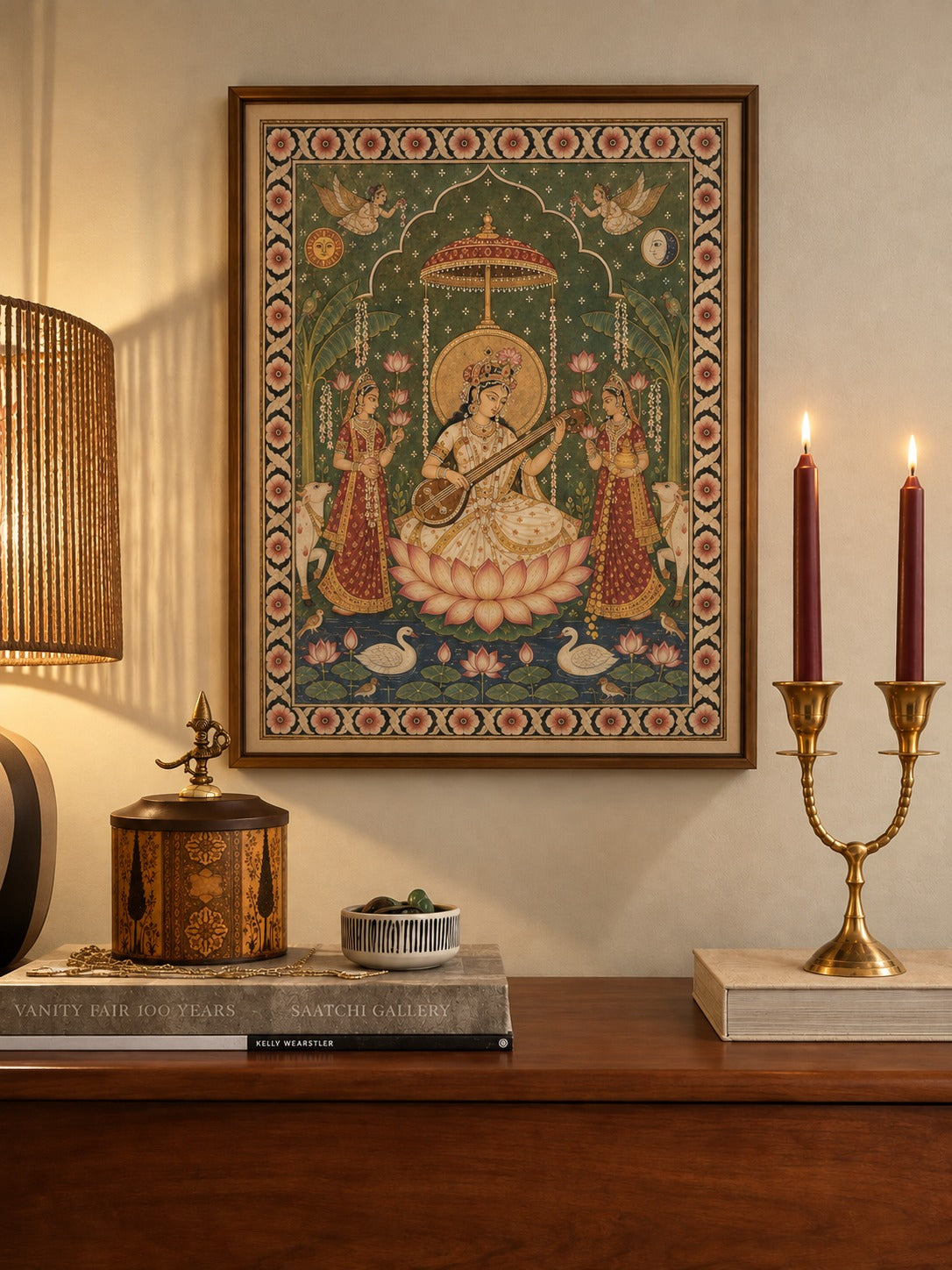
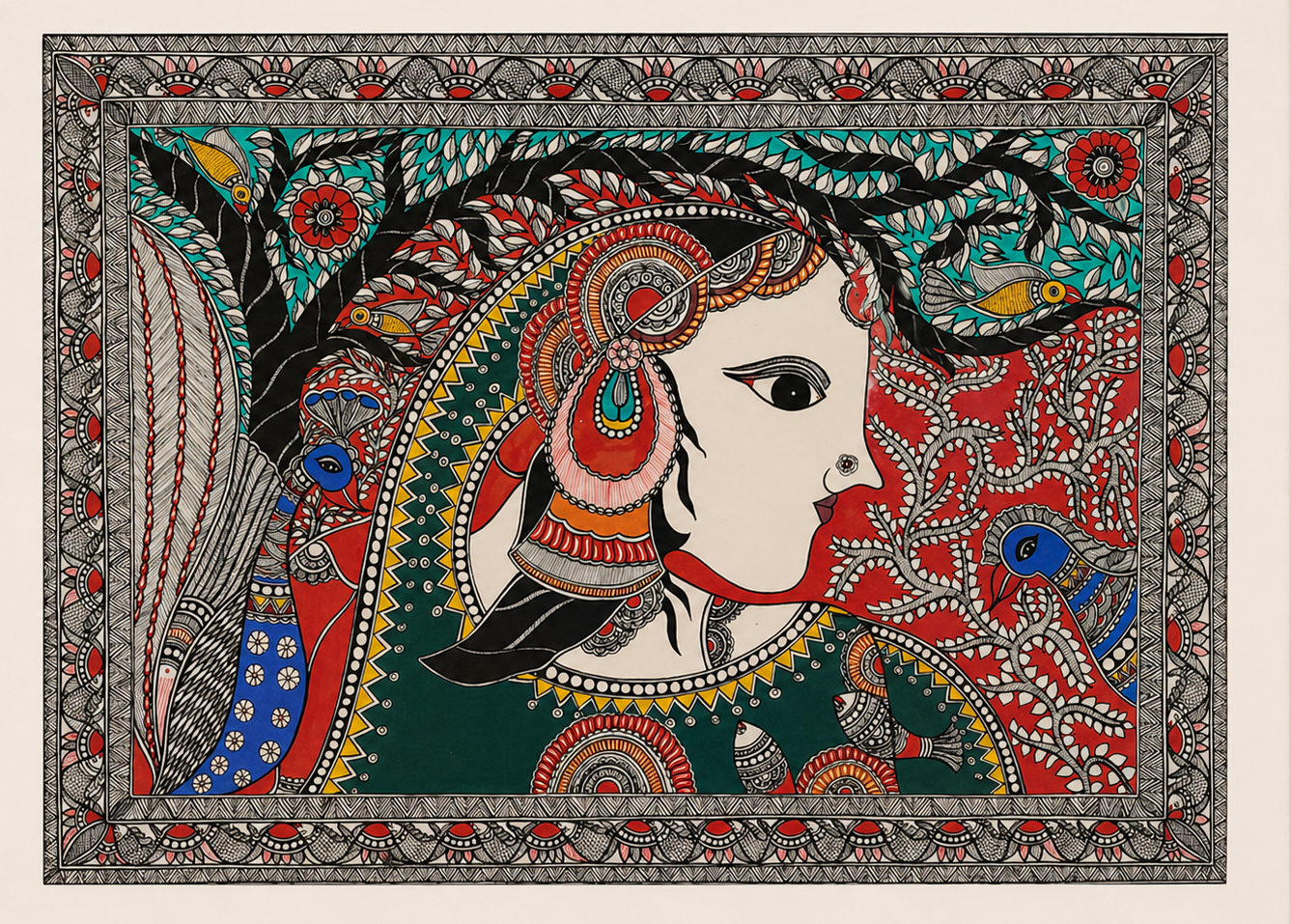
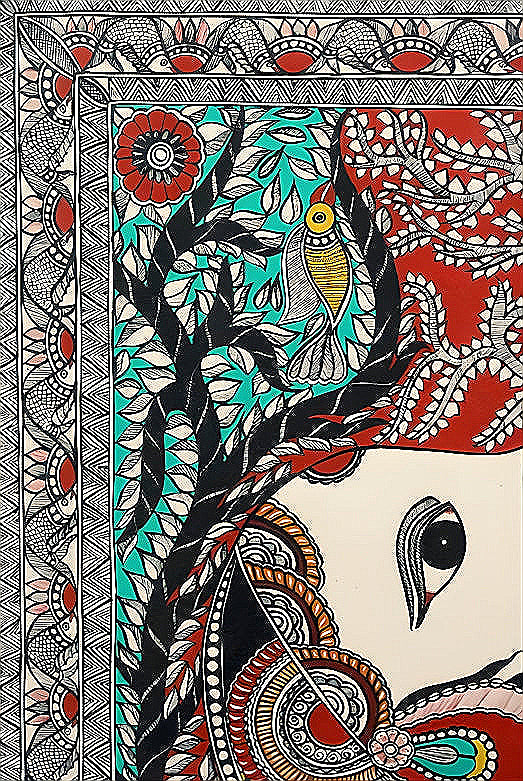
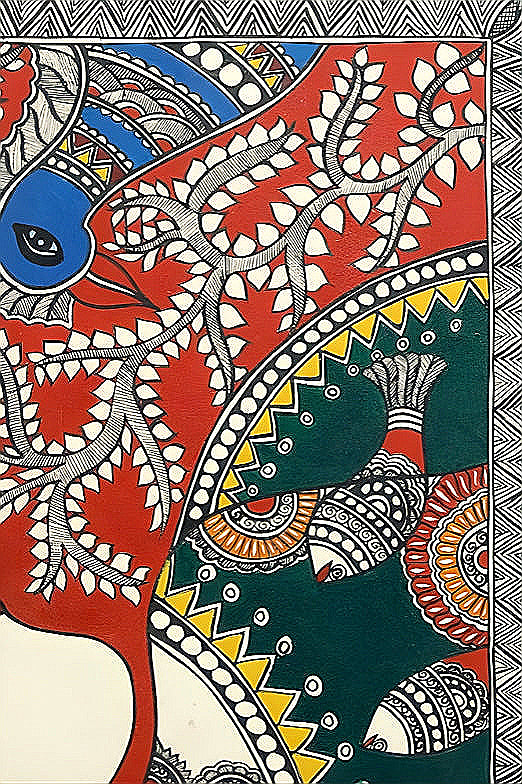
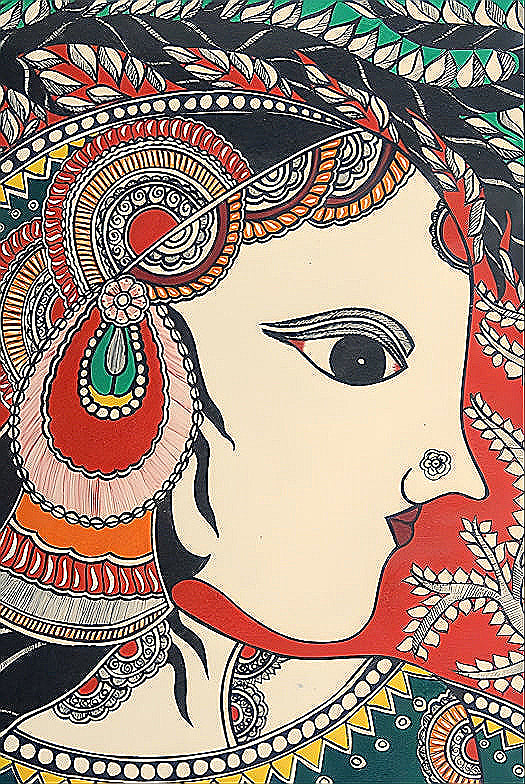
Madhubani painting, also known as Mithila painting, originates from the ancient Mithila region of Bihar and is traditionally traced to the Treta Yuga, the era of the Ramayana. According to cultural lore, King Janaka commissioned artists to adorn the city during the wedding of his daughter Sita to Lord Rama, transforming homes and ceremonial spaces into sacred environments of celebration, courage and divine destiny.
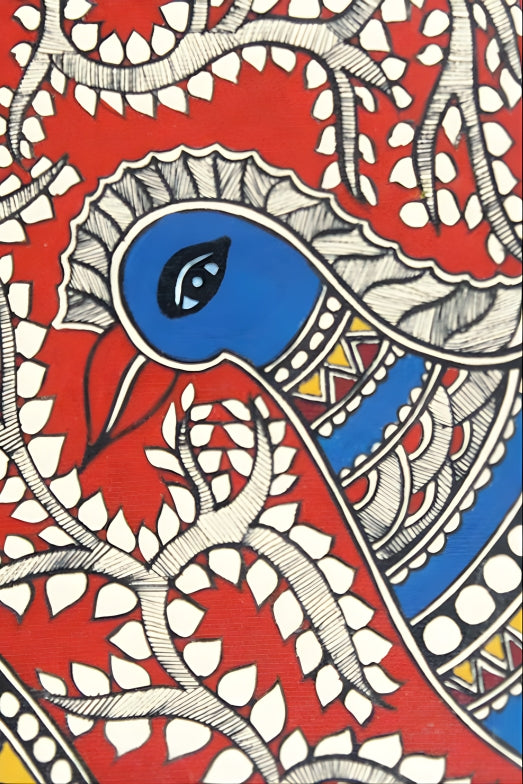
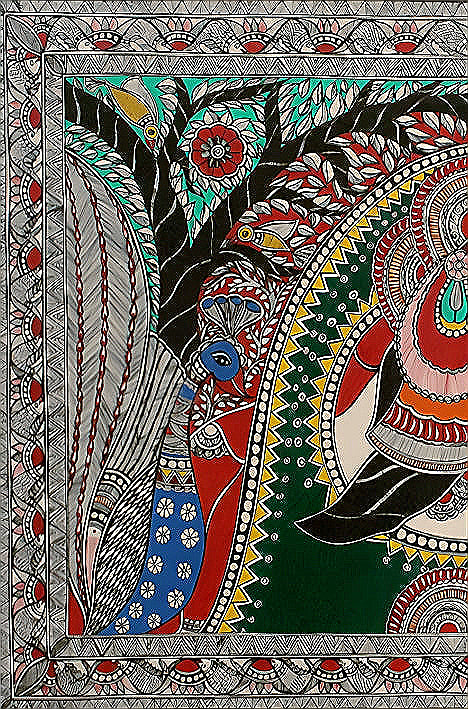
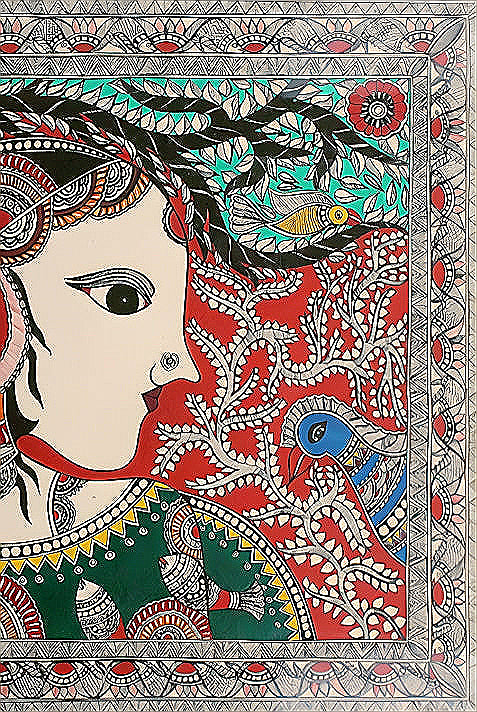
In this composition, Sita is not merely portrayed as a mythological figure but as a symbol of virtue, resilience and sacred femininity. In Mithila tradition, her image embodies devotion, strength under trial and unwavering moral clarity. Rendered within intricate borders and dense geometric ornamentation, the figure is framed by symbolic motifs that invoke protection and auspicious energy. The absence of empty space reflects a worldview rooted in abundance, where narrative, devotion and environment are inseparable.
Recognised as a Geographical Indication (GI Application No. 37) and awarded GI status in 2006–2007 as the 30th registered GI product of India, Madhubani Painting remains protected in its regional authenticity and traditional practice. This work, painted by Shri Lakshmi Kumari of Mithila, continues a lineage sustained through discipline, inherited technique and ritual intention.
Disclaimer:
- The frames shown are for display purposes only and are not included with the artwork.
- As these are made-to-order designer pieces, expect minor colour variations from the displayed artwork.