





Nick Jonas Wore It On A London Red Carpet. A K-Pop Star Sang It In A Chennai Temple. Now America Is Finally Paying Attention to India’s Most Sacred Jewelry.
Sacred Indian Jewelry, Without Translation
A red carpet in London is not where you’d expect to see a mangalsutra.
Cameras, velvet ropes, the usual choreography of celebrity appearances and then a small yet deliberate detail. Nick Jonas, wearing a mangalsutra wrapped around his wrist. Not styled as irony. Not exaggerated for social capital. Just there, sitting quietly against a tailored suit.
That same week, in Chennai, K-pop artist AoorA stood inside a temple singing in sanskrit, rudraksha beads resting against his chest. The setting was devotional. The beads were not costume. They belonged to the space.
Two different worlds, with the same inheritance moving through them.
Indian jewelry does not begin in fashion. It begins in ritual, in architecture, in theology. It carries memory in its structure. And when it appears outside India, the interesting question is not whether it looks beautiful, it’s whether it has kept its meaning.
For BRAHM, these moments aren’t about virality. It’s about recognition. In these moments, something long embedded in ritual and heritage has begun to enter global consciousness with its meaning intact.
The Moments That Shifted Attention
When Nick Jonas wore a mangalsutra at The Bluff premiere, global searches for Indian jewelry climbed. The conversation moved quickly beyond who styled him. People wanted to understand what they were looking at.
The mangalsutra is traditionally worn by married Hindu women. The black beads are believed to deflect negative energy. The gold pendant stabilizes and symbolizes prosperity within the marriage. It is not simply a necklace. It is a vow translated into material form.
In Chennai, when rudraksha beads appeared inside a temple performance, viewers asked about Shiva. What are these beads? Why are they worn for meditation? What do the different mukhi signify?
Those questions matter. They signal a shift from consumption to curiosity.
Indian jewelry, when presented without distortion, invites study. It asks to be understood.

The images circulated globally. Searches for Indian jewelry surged. Conversations moved beyond style commentary and towards meaning. What is a mangalsutra? Why the black beads? What does it signify?

Not long after in Chennai, AoorA, a K-pop artist performed a sanskrit song inside a temple wearing rudraksha beads. A piece of Indian jewelry connected to Shiva and meditation. The visual language communicated here was devotional rather than performative. Once again, audiences asked about Indian jewelry and its spiritual context.
These two moments placed Indian jewelry at the center of cultural discussion. More than as ornamental pieces but as heritage.
For BRAHM, this shift confirms something fundamental. Sacred jewelry resonates globally when presented with integrity.
Shiva Moves Through the Details
If you follow sacred Indian jewelry long enough, you will meet Shiva.
Not as a distant deity carved in stone, but as a presence embedded in objects people wear and place in their homes. Rudraksha beads are associated with him. They are seeds said to have formed from his tears during meditation. The serpent motifs in this jewelry also trace back to his iconography. The crescent moon, the trident, the drum; each element appears and reappears across regions in different materials.
Shiva is contradiction held in balance. Ascetic and householder. Stillness and motion. Destruction that makes room for renewal.
The Nataraja form, Shiva as a cosmic dancer, captures this tension most clearly. One foot pins down ignorance. One hand signals fearlessness. Fire encircles him, not as chaos, but as a part of his rhythm. In the form of a sculpture this becomes cosmology cast in metal.
That same cosmology informs sacred jewelry. Geometry is not accidental. Gemstone placement is not arbitrary. Symbolism is not ornamental.
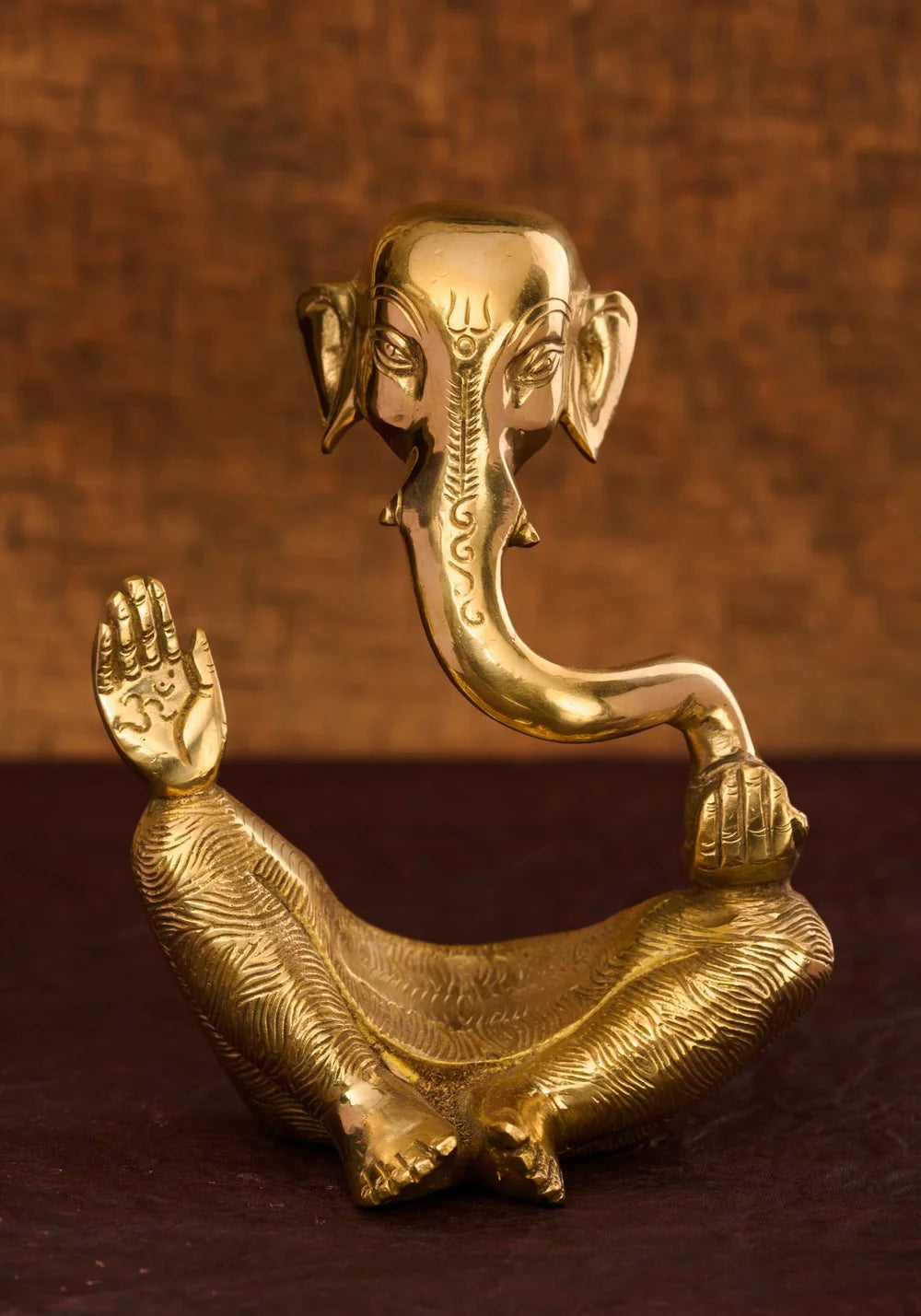
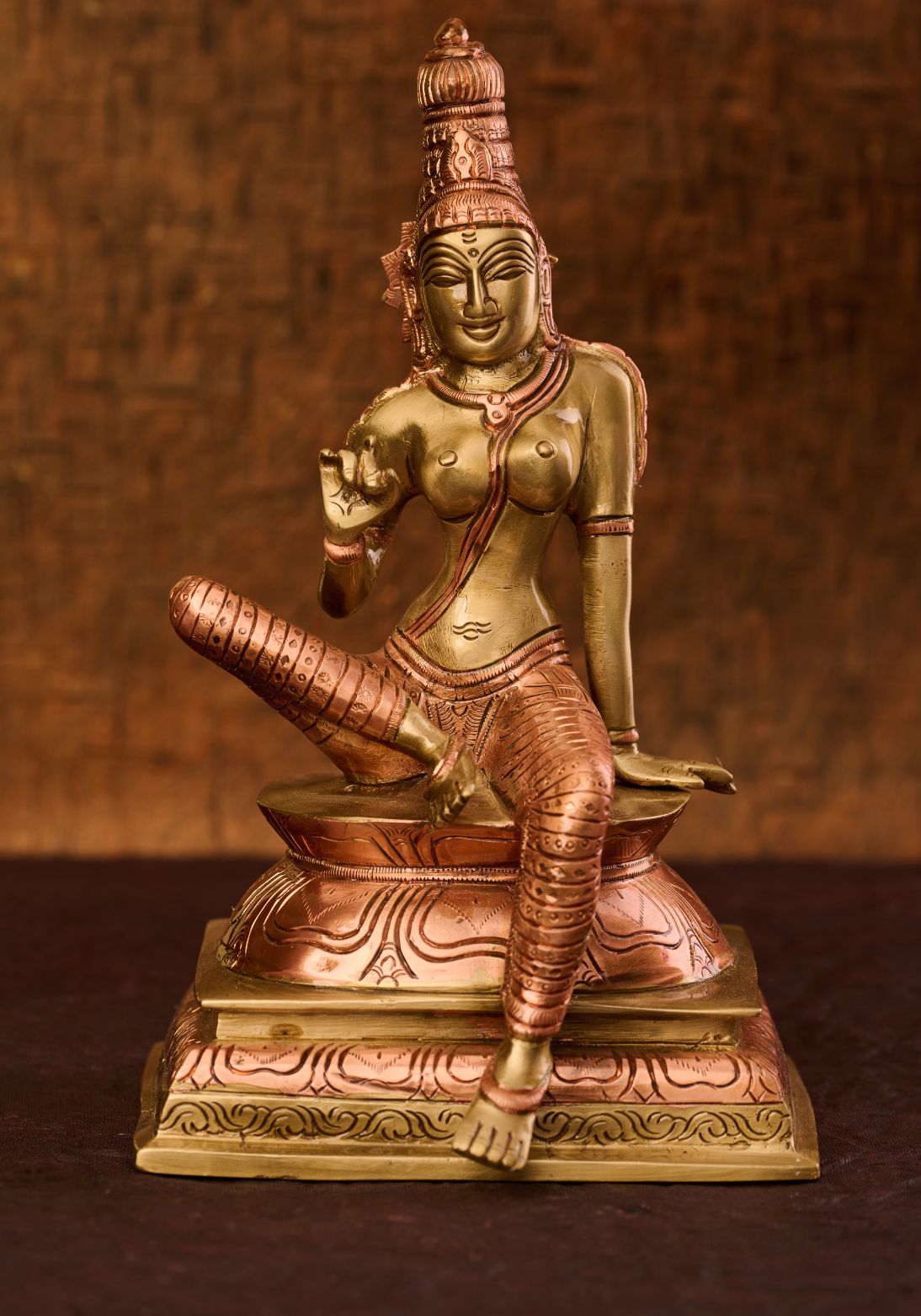
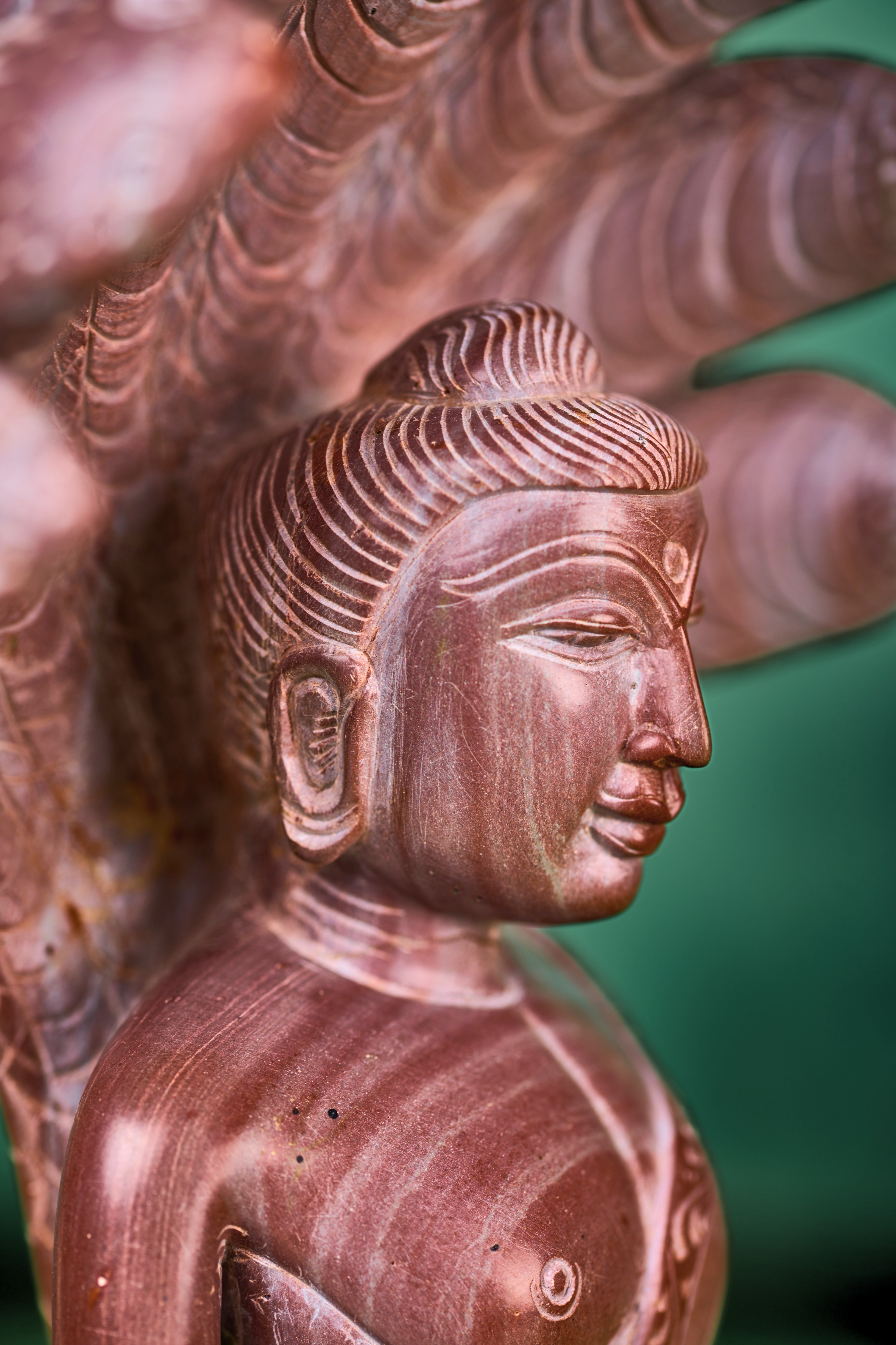
At BRAHM, our Shiva sculptures are created within that framework. The Nataraja Brass Sculpture preserves the proportional relationships found in classic forms. The Adiyogi bust holds the somber intensity associated with meditative practices. The Ardhanarishwar sculpture reflects duality resolved into one body, masculine and feminine held together without hierarchy.
More than aesthetic references, these are structural decisions.
Sacred jewelry and sacred sculpture emerge from that same lineage. One rests against skin. The other anchors a room. Both are built around meaning.
You can explore our Shiva sculptures here:
What Makes Indian Jewelry Sacred
Sacred Indian jewelry exists at the intersection of theology, astrology and regional craftsmanship.
A mangalsutra binds marital commitment with symbolic protection. Temple necklaces began as adornment for deities in South Indian temples before becoming central to bridal attire and classical dance. Lakshmi motifs, lotus engravings and peacock forms are structured around narrative and abundance.
Rudraksha malas connect directly to Shiva and are used in meditation practice. Each bead classification carries specific spiritual interpretation.
Navaratna jewelry arranges nine gemstones in a configuration aligned with Vedic astrology. Ruby, pearl, coral, emerald, yellow sapphire, diamond, blue sapphire, hessonite and cat’s eye are placed in deliberate order to harmonize planetary influences.
Indian jewelry is constructed with intent. Every decision: from gemstone orientation to metal weight, reflects cosmology translated into craft.
At BRAHM, that architecture is preserved. Sacred forms can evolve in scale or styling, but their internal logic remains intact.
Indian Heritage Gems and Regional Traditions
Indian jewelry cannot be reduced to one silhouette. It encompasses multiple regional languages of craft.
- Kundan jewelry from Rajasthan involves setting uncut stones in highly refined gold foil. This technique emphasizes glow rather than brilliance, allowing gemstones to reflect ambient light.
- Polki Jewelry uses uncut diamonds with visible inclusions. The aesthetic prioritizes raw integrity over symmetry. Sacred pieces crafted in Polki style retains the organic character of the stone.
- Temple jewelry from Tamil Nadu is often cast in high-karat gold and features sculptural relief work. Historically designed for temple idols, they were later transitioned to bridal and dance traditions.
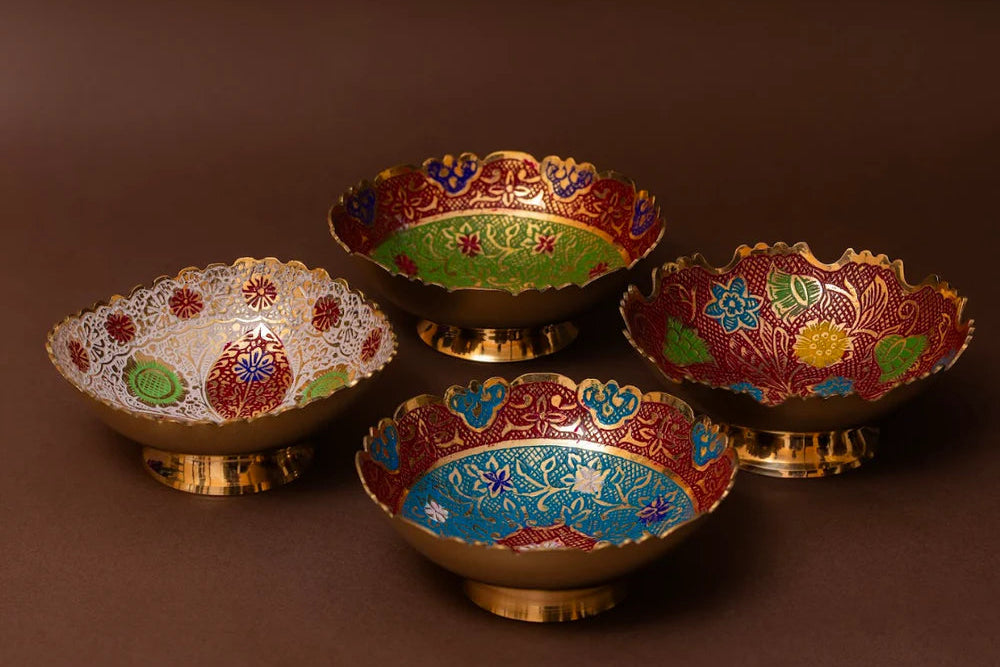
- Meenakari jewelry incorporates enamel work in vivid colors on the reverse side of gold settings. This technique transforms Indian Jewelry into wearable miniature painting.
- South Indian Kasu Malai necklaces consist of coin-like discs engraved with deities or royal insignia. This Sacred piece references prosperity and divine protection.
- Bengali Shakha Pola bangles combine conch shell and red coral, symbolizing marriage within Bengali Hindu communities. They carry specific regional identity.
Each style reinforces the diversity within Sacred Jewelry traditions. Indian Jewelry is not monolithic. It is geographically layered and historically dense.
Across these traditions, Shiva’s symbolism threads quietly through motifs and material choices. The trident appears in engraving. Serpents curve around pendants. Rudraksha beads punctuate gold.
Indian jewelry carries geography within it. It also carries theology.
Western Public Figures and Indian Jewels
Indian jewelry has appeared on global stages with increasing specificity. Zendaya has worn Indian-inspired pieces in collaboration with South Asian designers. Gigi Hadid has attended Indian weddings adorned in layered bridal sets that follow traditional structure. Beyoncé has worked with Indian craftspeople, integrating sacred aesthetics into performance design.
Earlier decades saw figures like Madonna incorporating Indian jewelry during periods of spiritual exploration, often without the depth of context now expected. Naomi Campbell and Elizabeth Hurley have appeared in Indian couture showcases wearing traditional sets.
What has changed is attribution. Designers are named. Regions are referenced. Techniques are acknowledged.
Indian jewelry is no longer framed as an exotic accent. It is identified as heritage.

Wearing Indian Jewelry with Cultural Awareness
Indian jewelry carries significance that deserves respect. Sacred pieces associated with marriage, deity worship, or astrological practice should be approached with understanding.
When engaging with Indian pieces:
Study the origin and symbolism of the piece.
Distinguish between ceremonial sacred jewelry and adaptable heritage forms.
Support Indian artisans and brands preserving traditional methods.
Use accurate terminology when referencing Indian pieces.

BRAHM and the Responsibility of Sacred Form
Sacred jewelry and sacred sculpture share a common responsibility. They hold stories that predate trend cycles and survive them:
- A rudraksha mala and a Shiva sculpture both reference meditation. Both reflect balance between motion and stillness. Both are designed to orient the individual toward something larger than themselves.
- The Nataraja sculpture captures movement held within fire.
- The Adiyogi form reflects interior discipline.
- The Ardhanarishwar sculpture embodies duality resolved into unity.
These forms do not need dilution to fit modern interiors. They require placement and understanding.
As Indian jewelry moves across continents, its structure must remain intact. Meaning cannot be edited out to make it easier to consume.
Indian jewelry does not demand spectacle. It carries its own gravity.
And Shiva, whether worn as rudraksha or placed as sculpture continues to move through it, steady and unchanged.
Watch K-pop artist, AoorA's, full music video below.
Why does a mangalsutra have black beads?
The black beads aren’t decorative. Traditionally, they’re believed to absorb negative energy and protect the marriage. Gold anchors prosperity, the beads guard it. It’s symbolism built into design.
Why are Navaratna gemstones arranged in a specific order?
It’s not random. Each of the nine stones represents a planet in Vedic astrology, and their placement follows a precise cosmic structure. Rearrange them and it’s no longer Navaratna. Sacred geometry doesn’t do guesswork.


Zach
I was born in Kuwait, raised between Paris and London, and now split life between Cambridge, Boston, and Chennai. I trained fast — a BA at 14, an MS at 18 — then built a career in trading and private equity before turning my eye to art and design. BRAHM is where I collect what matters: memory, beauty, and the everyday objects that carry both. I write to remember as much as to share, with my wife and my doggos keeping me anchored along the way.


Leave a comment
This site is protected by hCaptcha and the hCaptcha Privacy Policy and Terms of Service apply.