







Tradition Reimagined: How Traditional Wallpaper Keeps Heritage Alive
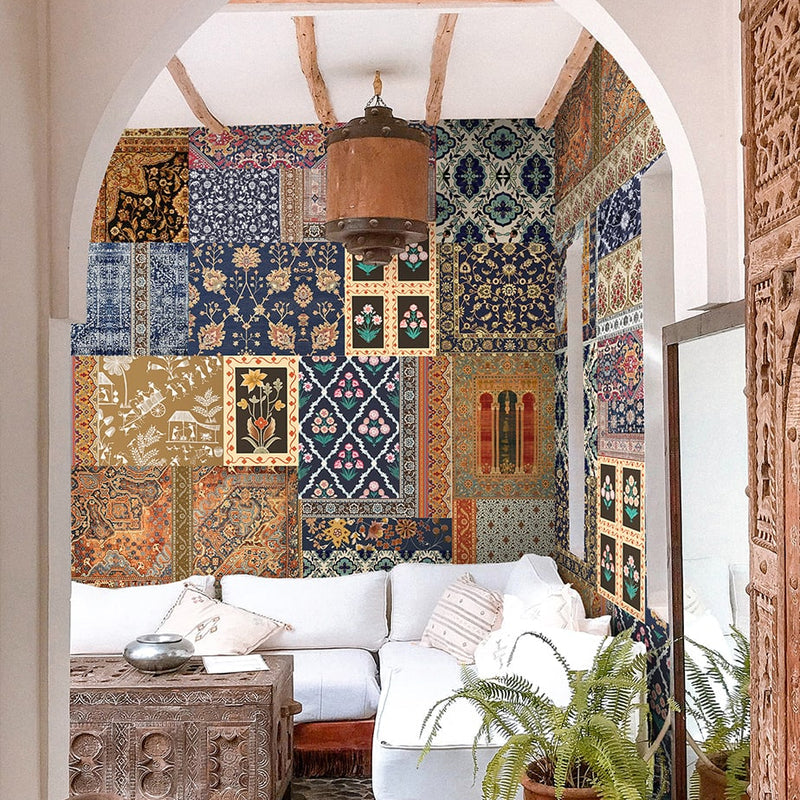
India has always embedded design into daily life. Pattern was never an afterthought or surface embellishment. It shaped how spaces were built, entered, and understood. From carved temple walls to painted doors and thresholds, repetition and geometry carried meaning. Today, that same sensibility moves into contemporary interiors through traditional wallpaper, allowing heritage to remain present without being preserved as an artifact.
Traditional wallpaper draws from architectural systems that have endured for centuries: the geometry of jaalis, the symmetry of mandalas, the framing logic of temple borders. These forms are not lifted unchanged from the past. They are translated, adjusted in scale and tone, and reintroduced in ways that suit modern homes while retaining their original intent.
Pattern as Cultural Language
In historic Indian homes, pattern functioned as a language. Motifs communicated ideas long before written explanation was needed. A jaali filtered light and air, but it also shaped perception, controlling how space expanded or contracted. Mandalas created visual centres, offering order through balance and repetition. Temple borders framed walls the way punctuation frames thought, guiding attention and marking transitions.
These patterns were not decorative preferences. They were tools for organising space and meaning. When they reappear through traditional wallpaper, they bring that logic forward. The wall becomes active again, shaping how a room is experienced rather than remaining neutral.
Translation, Not Replication
The strength of traditional wallpaper lies in interpretation. Replication risks fixing heritage in time. Translation allows it to continue functioning.
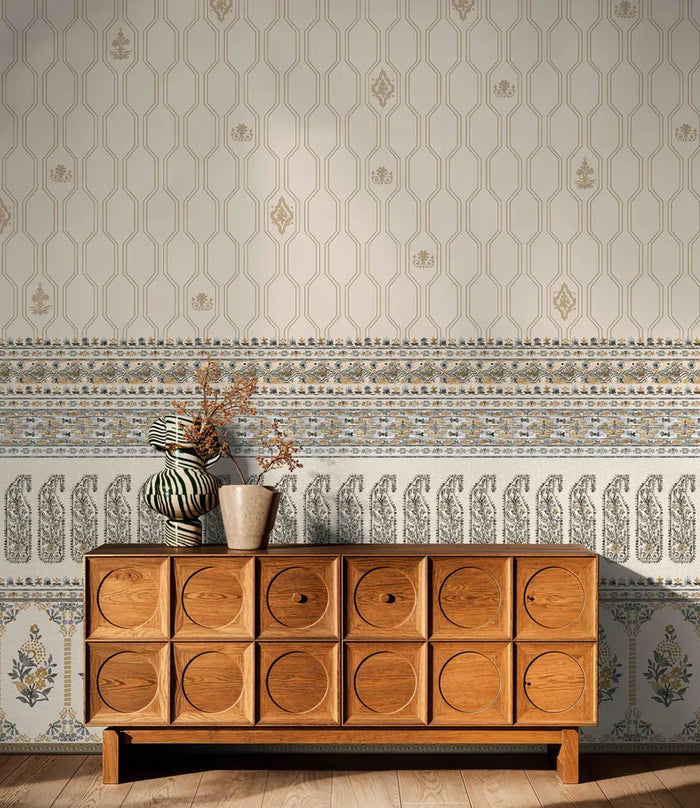
A jaali-inspired traditional wallpaper might reduce carved latticework into repeated geometric forms that read as texture rather than ornament. A mandala may be softened, partially abstracted, or re-scaled to suit contemporary proportions. Temple borders, once painted or carved, can become continuous patterns that frame a room without enclosing it.
This approach respects origin without imitation. The past is not recreated; it is carried forward.
Old Forms in Contemporary Spaces
Modern interiors often favour restraint and clarity. This does not require the absence of pattern. It requires balance. Traditional wallpaper introduces depth without visual excess when used deliberately.
In spaces defined by clean lines and simple materials, patterned walls add structure and warmth. A mandala-based traditional wallpaper can provide focus without becoming dominant. Jaali patterns create visual texture that responds to light throughout the day, echoing how carved stone interacts with time.
Even in compact apartments, traditional wallpaper can create spatial grounding. A single wall can reference the order of a courtyard or temple interior without replicating it. The aim is not historical recreation, but continuity of design thinking.

Heritage as a Design Resource
For generations, Indian artisans treated heritage as material to work with, not preserve unchanged. Forms were adapted, refined, and re-used across media. Traditional wallpaper continues this practice.
Jaali geometry offers endless variation, from dense to open, from subtle to pronounced. Mandalas can shift between complexity and restraint. Temple borders can be scaled, repeated, or fragmented to suit contemporary rooms. These forms endure because they were always adaptable.
At BRAHM, traditional wallpaper designs begin with research into architecture, murals, and textiles. Motifs are drawn by hand, studied for proportion and rhythm, then translated through modern printing. The result is wallpaper that feels considered rather than nostalgic.
Material Memory, Modern Method
Historically, patterns were shaped by stone, plaster, wood, and pigment. These materials influenced scale and repetition. Traditional wallpaper acknowledges this material history even as it uses modern production techniques.
Digital printing ensures clarity and durability, but the design process remains rooted in craft. Lines reference how they once existed in relief or paint. Scale is considered in relation to human movement and architectural proportion. The wallpaper is designed to live with the space, not sit on it.
Styling Traditional Wallpaper in the Modern Home
Using traditional wallpaper effectively depends on intention and restraint. Pattern should frame a space, not overwhelm it.
Living areas: Pair warm or neutral tones with jaali-inspired traditional wallpaper to introduce structure while keeping the room open and breathable.
Bedrooms: Choose mandala-based traditional wallpaper in muted palettes to create focus and balance without visual distraction.
Dining rooms: Temple-inspired borders or repeated motifs can add formality and continuity without excess.
Think of pattern as conversation rather than noise. The most successful spaces feel composed, not styled.
Indian Wallpaper as Continuity
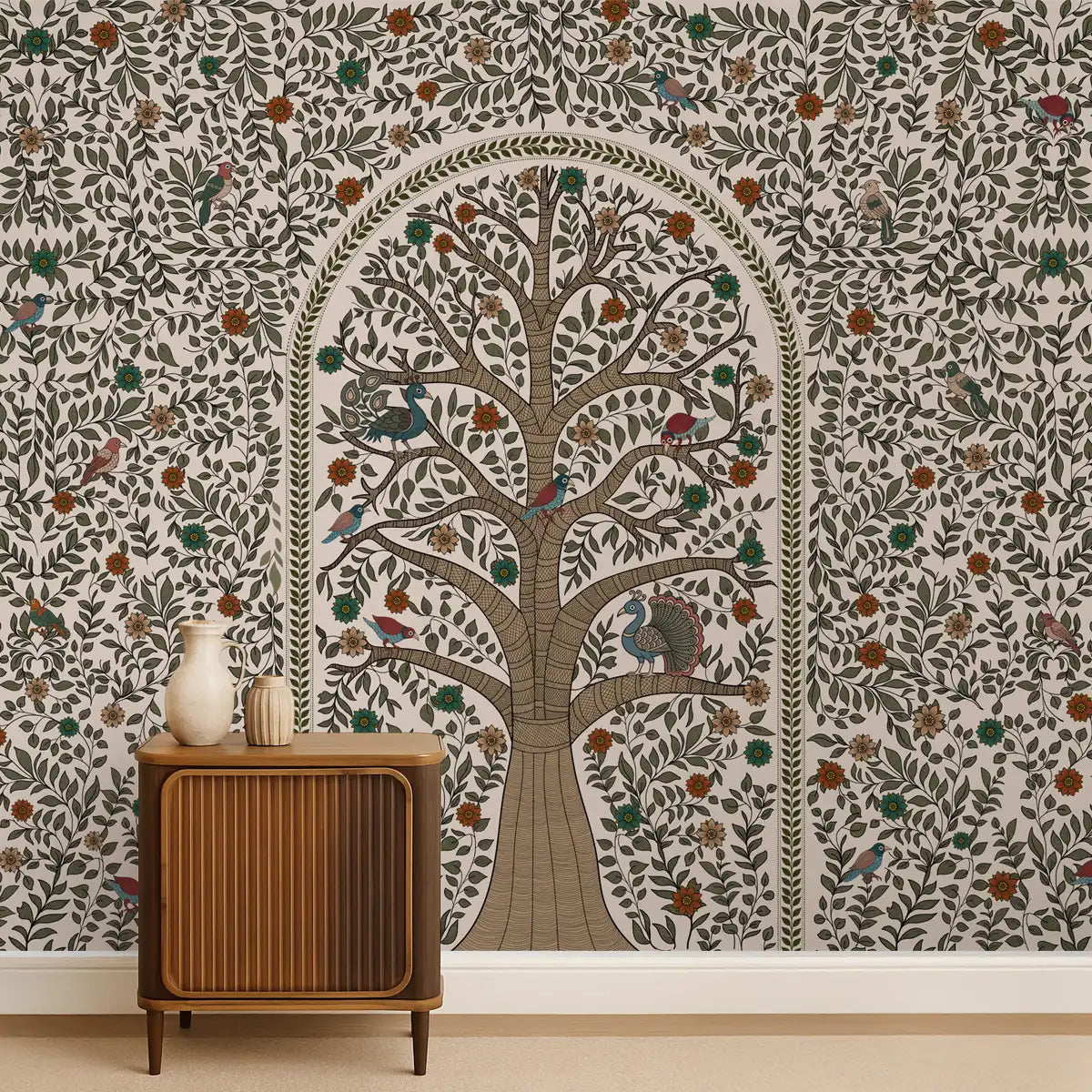
Traditional wallpaper sits within a broader Indian wallpaper tradition that values continuity over novelty. Whether floral, animal-led, or geometric, Indian wallpaper is grounded in systems that predate modern interiors. Repetition, proportion, and symbolism give these designs their staying power.
This continuity allows traditional wallpaper to move easily between architectural contexts. It can belong in a restored bungalow or a contemporary apartment without feeling displaced. What holds it together is respect for origin and confidence in adaptation.
A Living Design Tradition
To live with traditional wallpaper is to live with forms shaped by long use. These patterns were designed to endure, to be revisited and reinterpreted. That sensibility carries into modern interiors.
Nothing here exists purely for ornament. Each line connects back to a way of building and seeing. Yet nothing feels static. The designs remain open, responsive to light, furniture, and daily life.
This is where traditional wallpaper finds relevance. It does not ask to be admired as heritage. It asks to be lived with.
Where Heritage Finds a Place
Traditional wallpaper is not about looking backward. It is about allowing history to operate in the present. It keeps cultural knowledge active, visible, and usable.
Explore BRAHM’s collections of traditional wallpaper and Indian wallpaper to see how established forms find new structure. Each pattern draws from architectural and craft traditions, carried forward with purpose. These walls do not preserve heritage as memory alone. They allow it to remain part of how spaces are made and experienced today.
Featured Traditional Wallpapers

Nirek Panditha
I was born and raised in Sri Lanka but I come from a half- Indian, half- Sri Lankan background. As I've grown older I've begun to recognise the importance of remembering our collective cultural heritage, be it through the stories, the arts or even craftsmanship that still holds the memory of the hands that shaped it.



Leave a comment
This site is protected by hCaptcha and the hCaptcha Privacy Policy and Terms of Service apply.