







Sacred Symmetry: Indian Design and Geometric Wallpaper
In India, geometry was never ornamental by accident. It functioned as a system of order, measurement, and belief. Circles, triangles, grids, and lattices were used not simply to decorate space, but to structure it intellectually and spiritually. Long before geometry entered modern design vocabulary, it was already embedded in architecture, ritual, and craft. Today, this lineage continues quietly through geometric wallpaper, where ancient principles of balance and proportion reappear on contemporary walls.
Geometry in Indian design has always been tied to alignment: alignment with the body, with space, and with the cosmos. This is why geometric patterns feel grounding rather than decorative. They do not seek attention; they establish structure. When translated into wallpaper, these same forms retain their ability to organise space, even when their symbolic meanings are no longer consciously recognised.
Geometry as a Sacred System
Indian architectural traditions treated geometry as a language rather than a visual style. Temple plans were laid out using strict mathematical and symbolic frameworks described in ancient texts such as the Vastu Shastra and Shilpa Shastras. These manuals defined proportions, directional alignments, and geometric grids that governed everything from village layouts to shrine dimensions.
At the heart of many temples lies the mandala, a geometric diagram representing the universe. The most common form, the Vastu Purusha Mandala, divides space into a square grid, each segment associated with a deity or cosmic principle. This grid was not symbolic alone; it determined structural load, circulation, and spatial hierarchy. Geometry became the foundation of both meaning and engineering.
The square represented stability and the material world. The circle suggested continuity and the infinite. Triangles conveyed movement, direction, and transformation. When these shapes intersected, they created a visual order that guided the eye and the body through space. This logic continues to inform geometric wallpaper, where repetition and proportion create rhythm rather than spectacle.
Light, Pattern, and Architectural Geometry
One of the most enduring expressions of Indian geometry appears in jaali screens. These perforated stone lattices, found in temples, mosques, and palaces, are constructed from repeating geometric units. Beyond their visual complexity, jaalis served functional purposes: regulating airflow, controlling light, and providing privacy.
The geometry of jaalis was calculated to balance openness and enclosure. Light filtered through repeating patterns, creating movement across interior surfaces throughout the day. The pattern was never static. It responded to time.
This relationship between geometry and light is directly relevant to modern geometric wallpaper. When placed on a wall, especially one exposed to natural light, repeating patterns interact with shadow and surface texture. Subtle shifts in light reveal depth within flat design, echoing architectural precedents without imitation.
Geometry Beyond Stone
Sacred geometry in India did not remain confined to architecture. It migrated across materials and scales. Textile traditions such as block printing and weaving relied heavily on geometric organisation. Artisans carved wooden blocks with grids, stars, and repeating floral abstractions derived from mathematical division rather than freehand drawing.
Floor arts such as kolam and rangoli further demonstrate geometry as daily practice. These designs, drawn with rice flour or chalk, are constructed using dot grids and symmetrical repetition. They are made, erased, and remade, reinforcing geometry as process rather than permanent object.
This emphasis on repetition and impermanence shaped the way patterns evolved. Designs were refined over generations through use, not documentation. When these systems inform geometric wallpaper, they bring with them a sense of continuity rooted in making rather than display.
From Ritual Surface to Interior Wall
Historically, Indian geometric patterns often existed on transitional surfaces: thresholds, floors, screens, courtyards. They guided movement and attention rather than serving as backdrops. Wallpaper changes this condition by fixing geometry onto vertical planes within private interiors.
Yet the logic remains intact. Geometric wallpaper organises space visually. It establishes scale, defines zones, and influences how a room feels without relying on representational imagery. Because geometric patterns do not depict objects or narratives, they allow interiors to remain flexible and open-ended.
This is why geometry adapts so well to modern spaces. It does not impose identity. It provides structure.
Why Geometric Wallpaper Feels Calming
The psychological appeal of geometric design lies in predictability and variation working together. Repetition creates stability. Slight shifts in scale, line weight, or spacing introduce interest. Indian geometric traditions understood this balance intuitively.
Perfect symmetry was rarely the goal. Instead, artisans allowed for small irregularities that revealed human involvement. These variations softened rigid systems and prevented monotony. In geometric wallpaper, this translates into patterns that feel alive rather than mechanical.
A room covered in geometry can feel calm because the eye understands the logic quickly and then rests within it. The mind does not search for meaning; it responds to rhythm.

Geometric Wallpaper in Contemporary Interiors
In modern design, geometric wallpaper serves multiple functions. It can act as a focal surface or recede into background texture. Its impact depends on scale, contrast, and placement rather than complexity alone.
Large-scale geometric patterns can alter perceived proportions of a room. Vertical repetition can emphasise height. Horizontal grids can widen narrow spaces. Fine, dense patterns can create intimacy, while open geometry introduces airiness.
Because geometry interacts strongly with architecture, it rewards thoughtful placement. Used selectively, it enhances spatial clarity rather than overwhelming it.
Design Advice for Using Geometric Wallpaper
Geometry works best when it responds to the function and scale of a space.
-
For bedrooms, meditation rooms, or rest areas, choose softer tones and finely scaled patterns that guide the eye without dominating the atmosphere.
-
In larger rooms or spaces with high ceilings, bolder lines and higher contrast geometric wallpaper can reinforce architectural structure and draw attention to volume.
-
For transitional spaces such as corridors or stairwells, subtle repetition helps carry visual rhythm from one area to the next without demanding focus.
The strongest geometric patterns feel integrated into the room, not applied to it.
Craft, Translation, and Modern Production
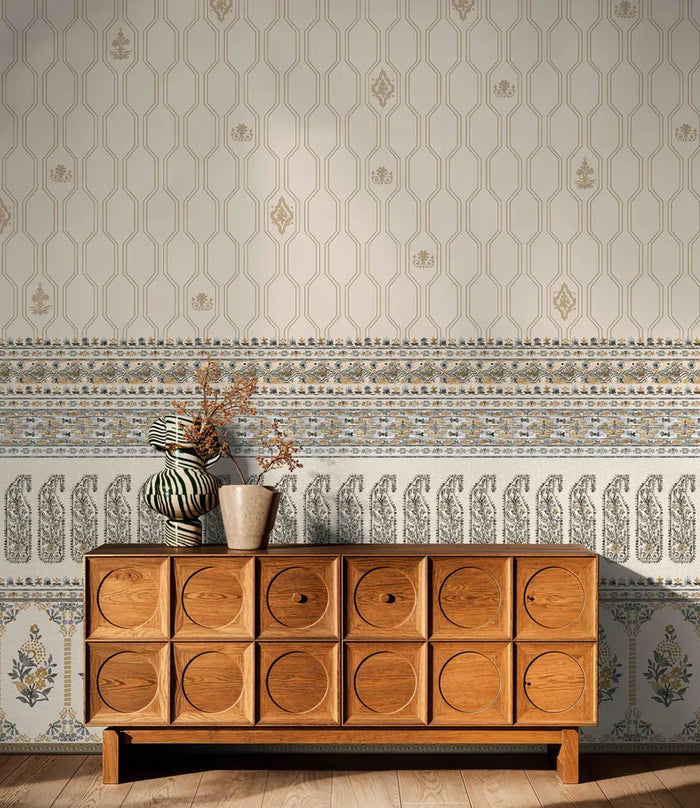
At BRAHM, geometry is approached as an inherited system rather than a decorative trend. Each geometric wallpaper design begins with hand-drawn studies informed by architectural grids, manuscript borders, and textile patterns. These studies are refined through layering and repetition before being translated into print.
Modern printing allows for precision and durability, but the original intent remains visible. Line variation, spacing, and proportion are preserved rather than flattened. This balance between craft and technology ensures that geometry retains warmth even in a contemporary context.
The goal is not historical reproduction, but continuity. Patterns acknowledge their origins without becoming literal references.
Geometry as Cultural Memory
One reason geometry persists across centuries is its adaptability. Forms remain consistent even as materials, techniques, and contexts change. This makes geometry a carrier of cultural memory without requiring explanation.
When applied as geometric wallpaper, these forms quietly reintroduce historical systems of order into daily life. They do not ask to be interpreted. They simply function.
This is what allows geometric design to feel timeless rather than nostalgic. It exists outside of fashion cycles because its purpose is structural, not expressive.
Living With Structure
To live with geometry is to accept structure as a form of care. Indian builders, artists, and designers understood that order supports freedom. Clear frameworks allow variation without chaos.
On the wall, geometric wallpaper performs the same role. It stabilises space, supports activity, and creates visual coherence. It does not seek attention, but it holds it when needed.
In this sense, geometry is not an aesthetic choice alone. It is an approach to space shaped by centuries of thinking about how humans inhabit the world.
The Sacred, Reconsidered
Sacred geometry in India was never confined to temples. It existed wherever attention, care, and intention were applied. By bringing these systems into contemporary interiors through geometric wallpaper, the boundary between sacred and everyday softens.
What remains is alignment: between surface and structure, pattern and purpose, history and use. Geometry continues to do what it has always done best. It orders space quietly and leaves room for life to unfold within it.
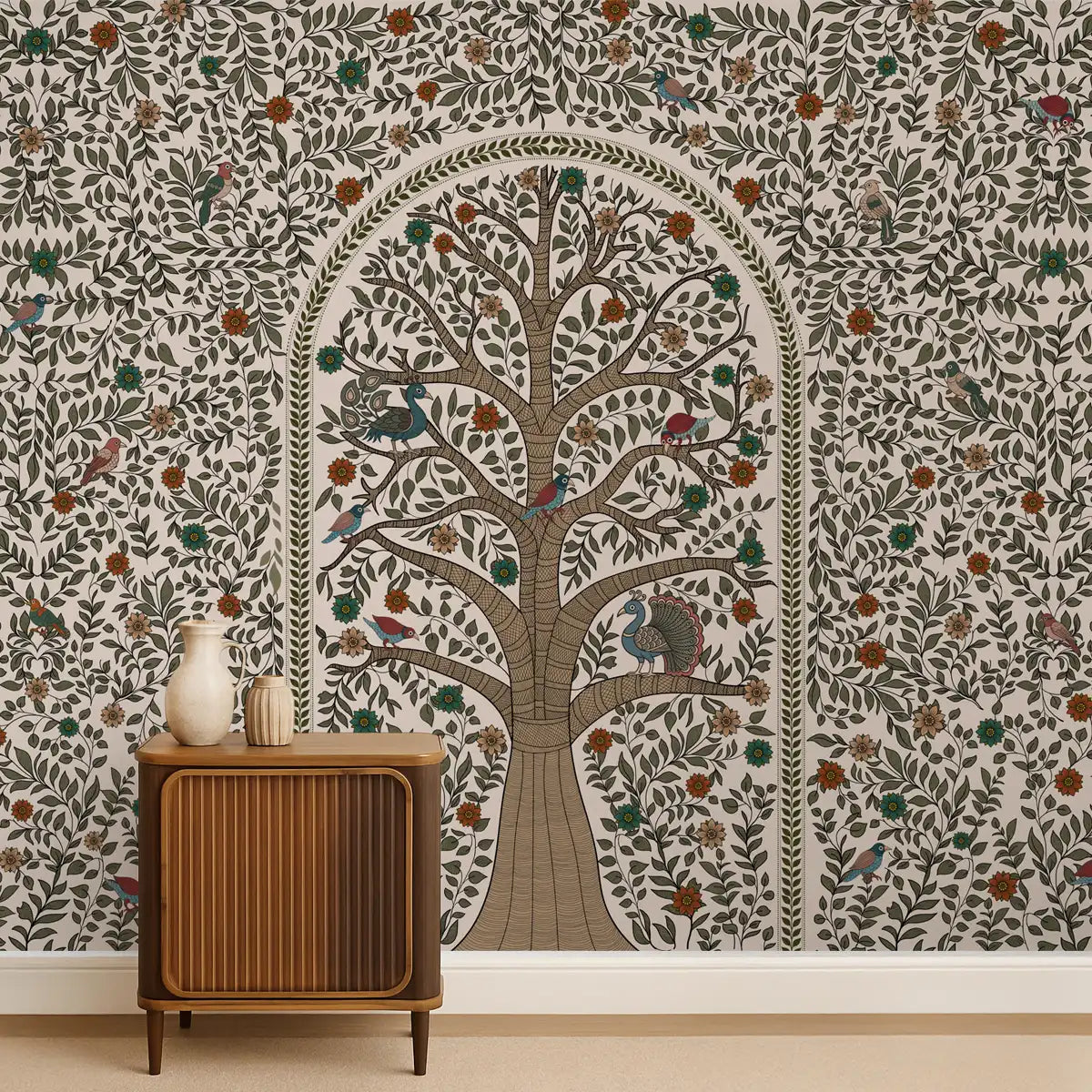
Featured Geometric Wallpapers

Nirek Panditha
I was born and raised in Sri Lanka but I come from a half- Indian, half- Sri Lankan background. As I've grown older I've begun to recognise the importance of remembering our collective cultural heritage, be it through the stories, the arts or even craftsmanship that still holds the memory of the hands that shaped it.



Leave a comment
This site is protected by hCaptcha and the hCaptcha Privacy Policy and Terms of Service apply.