







Indian Wall Decoration Traditions : Fresco, Pigment, Pattern
Walls have rarely been neutral in Indian visual culture.
In places where seasonal light shifts dramatically and thresholds are constantly crossed, walls become surfaces of memory, meaning and movement. Long before wallpaper became a product, ancient India understood walls as active participants in how space is experienced. Paint, pigment, plaster and texture were part of Indian wall decoration tradition and communicated with the people inside them, visually and emotionally.
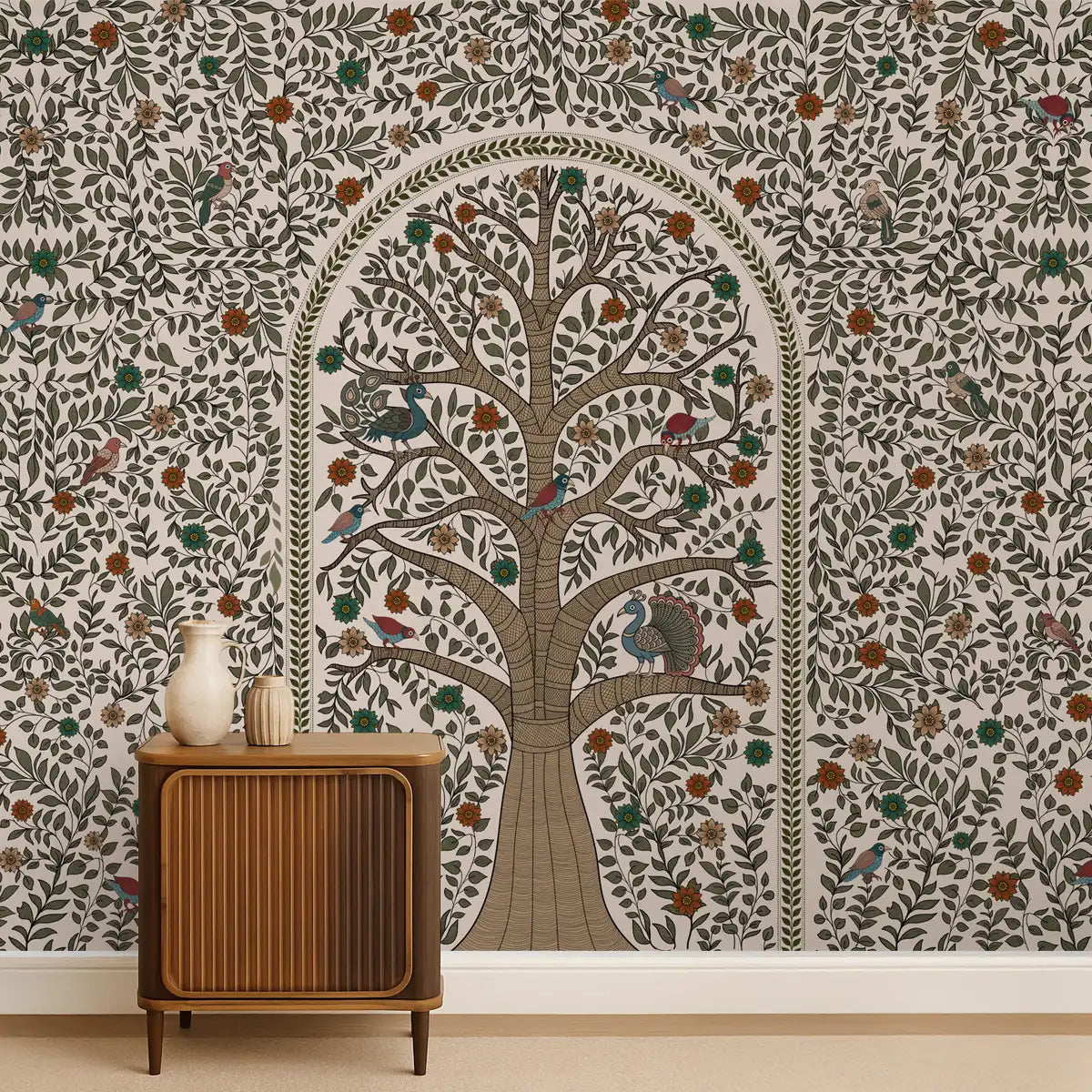
This instinct, to treat walls as surfaces that speak, is still visible today in the country’s frescoes, murals, plasterwork and vernacular decorations. In that sense, one can’t really claim that Indian wallpaper arrives ex nihilo. Indian wall decoration and is a continuation of an ongoing visual relationship between people and walls. BRAHM's Indian wallpaper collection seeks to continue that relationship
Walls as Narrative, Not Blankness
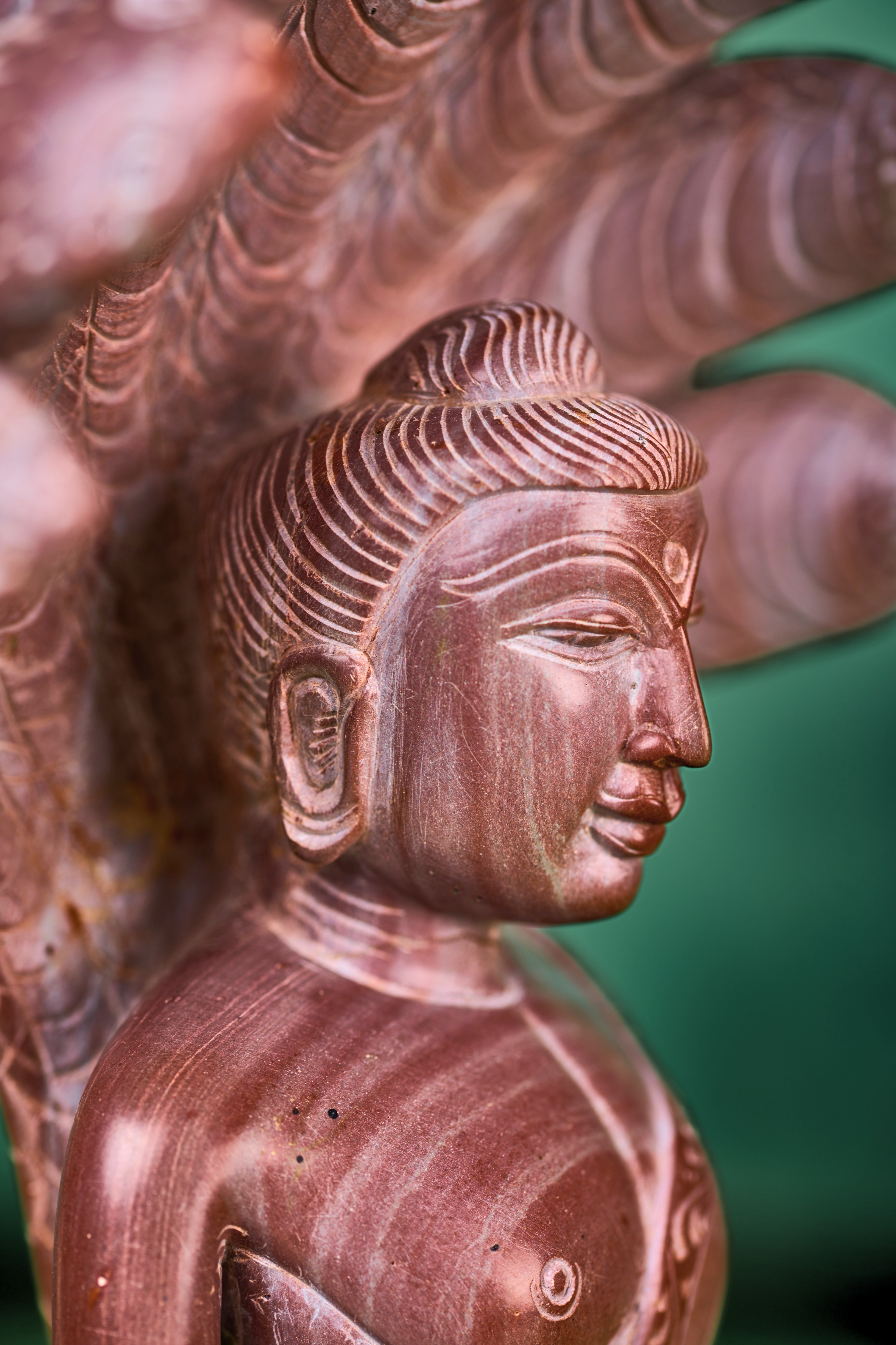
Indian wall decoration was and still is a narrative tool in many parts of the country, recounting myth geography, histories of families or spiritual cosmologies. The Ajanta caves, for instance, contain some of the oldest surviving painted walls in South Asia. Dating back as early as the 2nd century BCE and extending into the 6th century CE, these frescoes combine storytelling with a certain visual depth that persists 2,000 years later. The famous Padmapani Bodhisattva murals form continuous visual scrolls that seem to unfold across the rock surface rather than merely sit upon it.
Such works of Indian wall decoration are what lead one to think that walls don’t just have to separate spaces, but can be capable of extending time and story.

Indian Wall Decoration Traditions
Beyond monumental cave temples, the vernacular walls of homes across India have carried painted and patterned surfaces for centuries in keeping with Indian wall decoration traditions.
In eastern India, especially in Odisha, murals adorned the mud and plaster walls of rural homes. Not intended to be professional productions, but part of domestic life. They were seasonal, ceremonial and often tied to local festivals and rites. Pigments were sourced from the earth: red from iron oxide, yellow from turmeric, black from soot, white from lime. The result was less about art for the sake of art and more about integrating daily life with spiritual and communal rhythms.
In the Shekhawati region of Rajasthan, Indian wall decoration tradition was ever-present with the facades of havelies being covered with grand frescoes that tell tales of local history, everyday life, mythic epics and even colonial encounters. Painted in natural pigments fixed into the lime plaster itself, these murals were part of the architecture as a part of Indian wall decoration tradition.

Plasters, Pigment and Permanence
What distinguishes Indian wall decoration traditions from mere surface decoration is the relationship between media and surface.
Rather than paint on dry stone or wood, many Indian murals were executed on plaster while it was still wet. This method, similar to buon fresco practices found in Europe, embeds pigment into the wall itself. Over time, as the plaster cured, the image became part of the structure. This part of Indian wall decoration tradition produced a result was not a skin applied to architecture, but a fusion of design and surface.
This is one reason many ancient murals, from Ajanta to Shekhawati still speak with clarity. They were designed to age into their surfaces, not rest upon them.
This philosophy of permanence, where pigment, plaster and wall become a single visual organism is the undercurrent of why Indian wall decoration feels different. Instead of choosing to sit on top of a wall like decoration, good, quality Indian wall decorations aim to live with that wall.

Textiles, Color and Cultural Continuity In Indian Wall Decoration
India’s long textile history also influenced how Indian wall decorations were conceived.
Textiles were often pinned or draped on walls in homes, both for practical reasons (insulation, acoustics) and symbolic ones (marking seasonality or ceremony). The visual rhythms of these textiles, the repetition, pattern and variation all carried over into painted surfaces and later into wallpapers. Textiles and murals shared DNA: motif, scale and narrative all played into how interiors felt structured instead of filled.
That same impulse, for textured surfaces that work with light and movement, still appears in many Indian wall decoration and wallpaper designs today.

Why “Blank Walls” Are a Modern Idea
The notion of walls as neutral, unmarked or blank surfaces is a relatively recent one in global architectural history, especially in the West, where the wall’s role has often been to recede, to not be seen. They bore pattern, pigment, relief and meaning.
Blank walls are associated with modern minimalism. A language of absence. Indian wall decoration and visual traditions grew in contexts where absence and presence were negotiated differently, through narrative density, through ritual marking and through cycles of seasonal decoration and repainting.
Understanding this helps explain why many Indian wall decoration designs, which are dense, layered or rhythmic, can feel so natural when applied thoughtfully in modern interiors rather than thematic or overly decorative.
From Walls of Story to Walls of Wallpaper
When we talk about Indian wall decoration today, we’re talking about a long continuum.
From the carved plaster and embedded frescoes of temple chambers to the mud‑plastered domestic murals of rural Odisha, from the textile‑inspired patterning that hums on urban home walls to the layered cosmologies of Shekhawati mansions, Indian wall decoration and visual culture has always treated walls as active surfaces.
Modern Indian wall decoration and wallpaper isn’t a break from that tradition. It’s a contemporary iteration, one that respects texture, narrative flow, and surface depth while adapting to new materials and modern interiors.
If you'd like to learn more about Indian wall decoration and Indian wallpaper, feel free to check out BRAHM's Indian Wallpaper Guide
Featured Indian Wallpaper

Nirek Panditha
I was born and raised in Sri Lanka but I come from a half- Indian, half- Sri Lankan background. As I've grown older I've begun to recognise the importance of remembering our collective cultural heritage, be it through the stories, the arts or even craftsmanship that still holds the memory of the hands that shaped it.


Leave a comment
This site is protected by hCaptcha and the hCaptcha Privacy Policy and Terms of Service apply.